


Environmental Engineering Technology
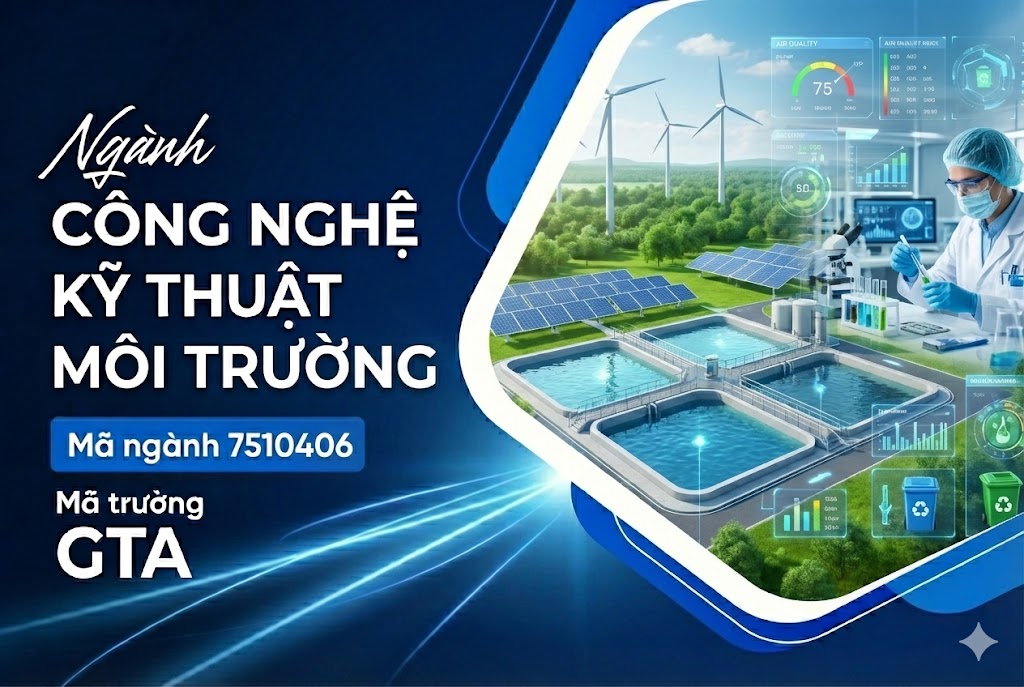
|
Major: |
Environmental Engineering Technology |
|
Code: |
7510406 |
|
Training Level: |
Undergraduate |
|
Mode of Study: |
Full-time |
|
Degree Awarded: |
Engineer |
|
Training Duration: |
4.5 years |
|
Total Credits: |
162 credits |
|
Admission Requirements: |
High school graduates or equivalent who meet the minimum quality assurance threshold in accordance with the admissions regulations of the Ministry of Education and Training and the annual regular undergraduate admission plan of the University of Transport Technology. |
|
Training Language: |
Vietnamese. |
|
Year of Admission Commencement: |
2015 |
|
Year of First Graduation: |
2019 |
|
Most Recent Program Revision Year: |
2024 |
I. GENERAL INTRODUCTION
The undergraduate program in Environmental Engineering Technology at the University of Transport Technology is designed with an applied orientation, aiming to train engineers with a solid foundation in natural sciences, social sciences, political theory, and national defense, while equipping them with in-depth knowledge in environmental technology and management. Students study advanced courses in environmental science fundamentals, water, air, and solid waste treatment processes and technologies, environmental ecology, environmental microbiology, environmental monitoring and assessment, climate change, environmental economics, circular economy, greenhouse gas emission inventory and carbon market development, environmental law and management, all within the context of sustainable development and environmental protection requirements, particularly in the transportation sector.
In addition, the program emphasizes the development of professional skills such as environmental monitoring, analysis, and impact assessment; proposing, calculating, designing, operating, and managing environmental treatment systems and facilities; preparing and managing environmental legal documentation; effectively using foreign languages, information technology, and specialized software; independent and team-based work; communication, presentation, negotiation, and environmental consulting skills.
Upon graduation, Environmental Engineering Technology graduates are capable of taking on a wide range of positions, including: officers at government environmental management agencies at central and local levels (Ministry of Natural Resources and Environment, Ministry of Transport, provincial Departments and Offices of Natural Resources and Environment, monitoring centers, etc.); technical specialists at environmental monitoring, consulting, design, construction, operation, and maintenance companies; environmental legal, policy, and procedural consultants; environmental, HSE, and greenhouse gas emission management officers in industrial zones, urban areas, factories, and enterprises; lecturers and researchers at universities, colleges, research institutes, research centers, and international environmental organizations and projects. Graduates also have the opportunity to pursue advanced studies (master’s or doctoral programs) domestically and internationally.
II. CURRICULUM STRUCTURE AND STUDY PLAN
The total volume of the entire program is 162 credits, not including Physical Education (04 credits) and National Defense and Security Education (09 credits).
Proposed Teaching and Learning Plan for a 4.5-Year Program (9 Semesters)
|
Knowledge |
Obligatory |
Optional |
Total |
|---|---|---|---|
|
I. GENERAL EDUCATION KNOWLEDGE MODULES |
41 |
0 |
41 |
|
1.1. General political theory and law |
13 |
0 |
13 |
|
1.2. Foreign languages |
8 |
0 |
8 |
|
1.3. Basic mathematics and science |
20 |
0 |
20 |
|
II. SUPPLEMENTARY KNOWLEDGE MODULES |
6 |
3 |
9 |
|
III. PROFESSIONAL EDUCATION KNOWLEDGE MODULES |
82 |
10 |
92 |
|
3.1. Basic industry knowledge |
22 |
2 |
24 |
|
3.2. Industry knowledge |
21 |
2 |
23 |
|
3.3. Specialized knowledge |
39 |
6 |
45 |
|
IV. GRADUATION MODULES |
20 |
0 |
20 |
|
4.1. Graduation internship |
12 |
|
12 |
|
4.2 Thesis/Graduation Project |
8 |
|
8 |
|
Total |
149 |
13 |
162 |


