


Minister Tran Hong Minh: Railway Industry Development Must Have Clear Roadmaps and Defined Products
Conducting Field Surveys and Identifying Research Objectives
On the afternoon of 28 May, continuing the field survey programme at several industrial units under the Ministry of National Defence to implement tasks related to "High-Speed Railway Technology and Urban Railway Technology", Minister of Construction Tran Hong Minh, together with the delegation, visited and worked with the Institute of Technology (General Department of Defence Industry) and the Military Industry-Telecoms Group (Viettel).
The delegation also included Deputy Minister Pham Minh Ha, leaders of departments, agencies and institutes, scientists from universities, and representatives of enterprises both within and outside the construction sector.
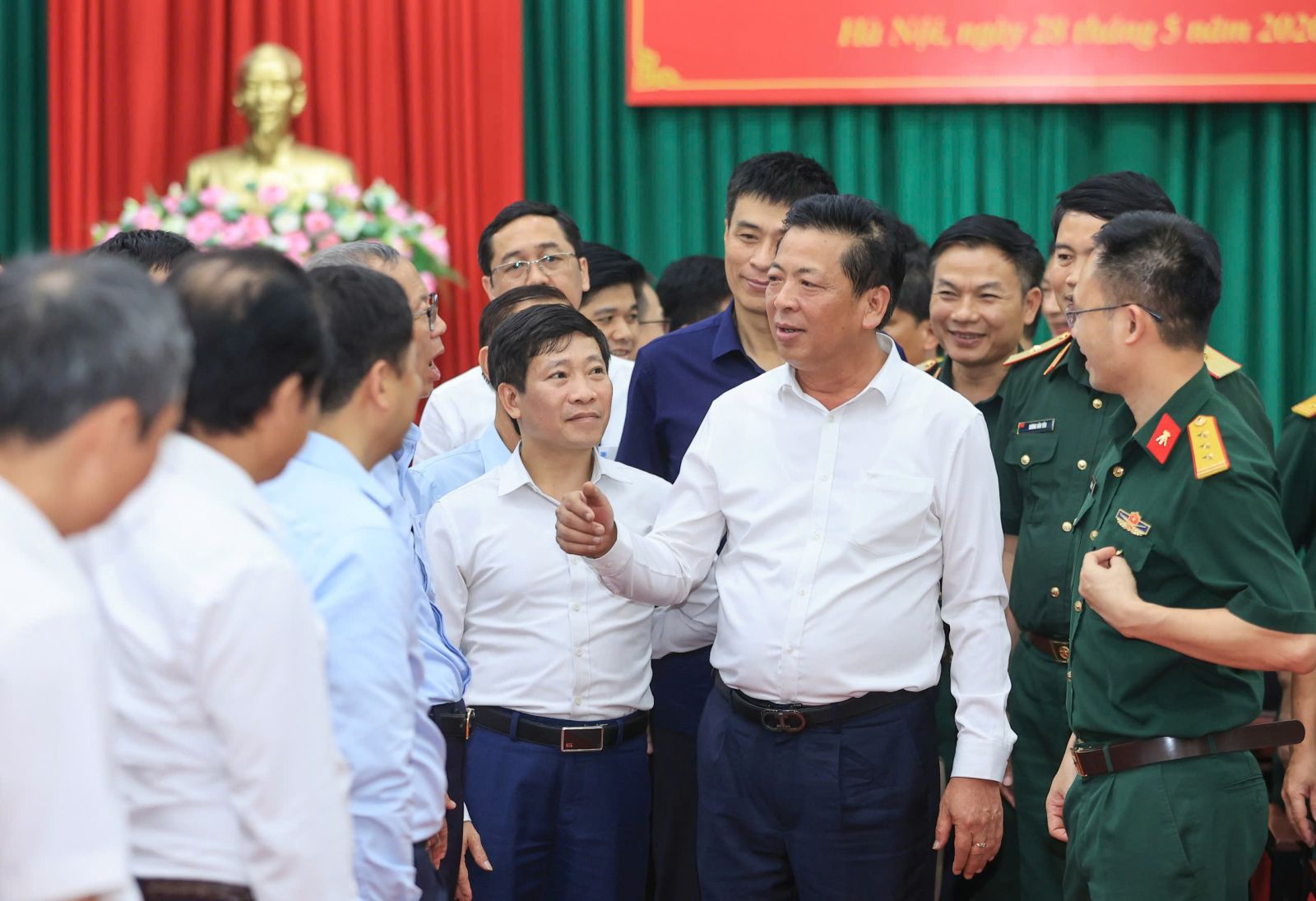
Assoc. Prof. Dr. Nguyen Hoang Long, Rector of the University of Transport Technology, joined the delegation led by Minister of Construction Tran Hong Minh at the General Department of Defence Industry
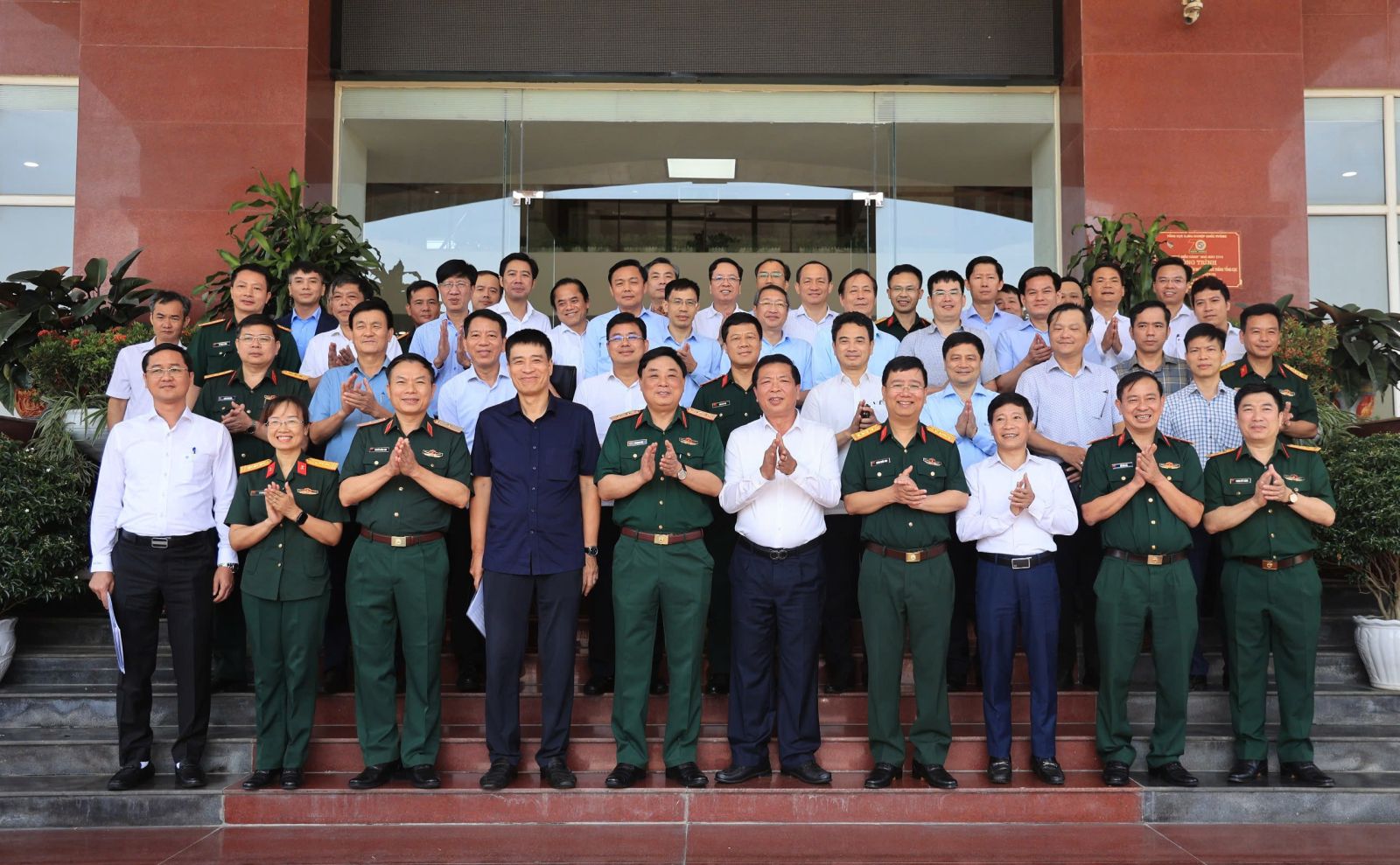
At the Institute of Technology, introducing the institute's research products, its leadership stated that the institute currently possesses a relatively comprehensive infrastructure system, including specialised laboratories, experimental workshops, and measurement and testing centres, forming an integrated capability chain from material research, technology design, prototype manufacturing, testing and measurement to technology transfer.
With its capacity and experience in implementing science and technology tasks serving national defence and security, the Institute is also capable of participating in civilian projects. In the railway sector, it can engage in research on rail production, axle manufacturing technology, wheel production, brake shoe manufacturing for trains, and several types of materials and spare parts for high-speed railways.
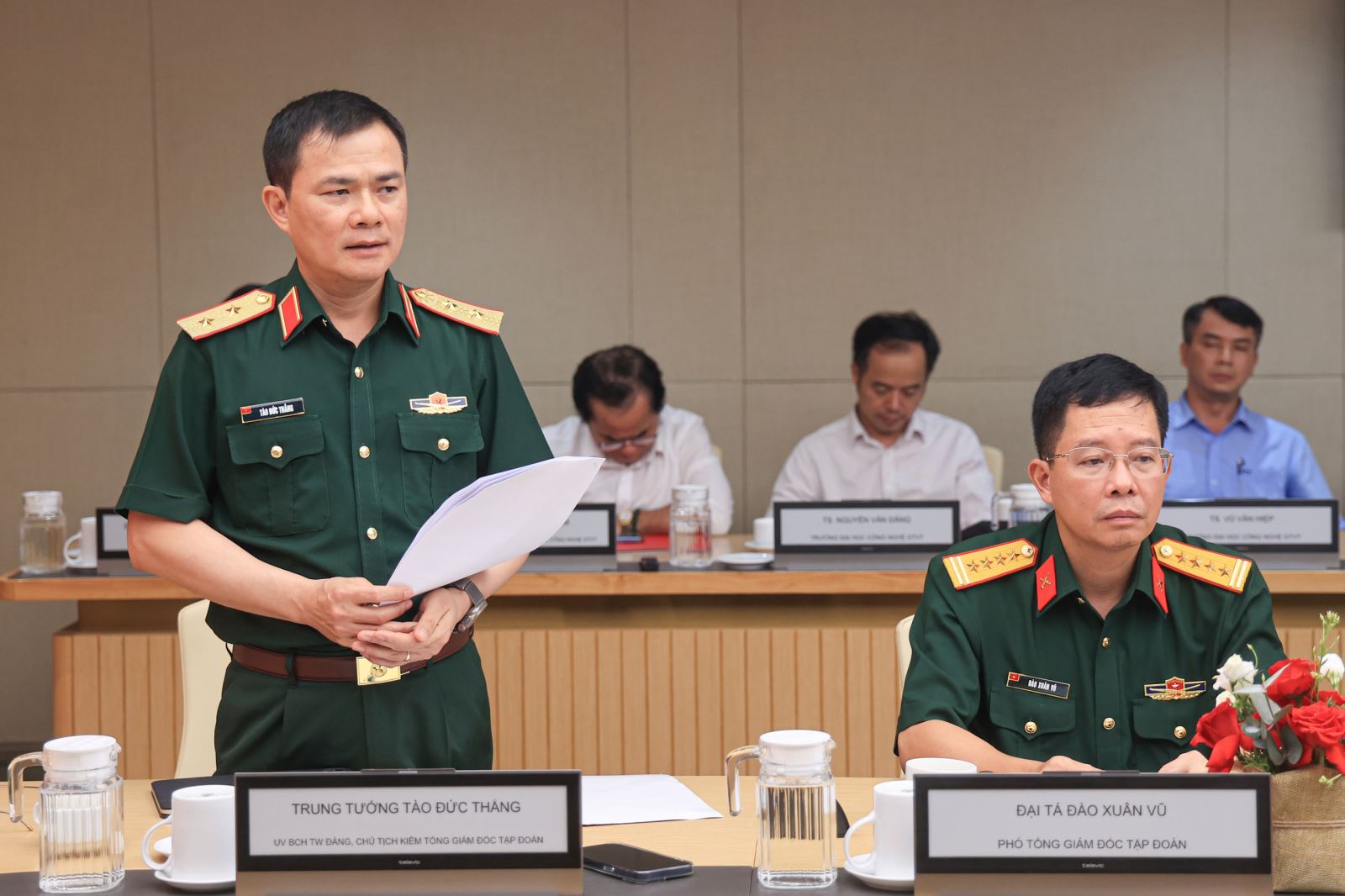
Lieutenant General Tao Duc Thang, Chairman and Chief Executive Officer of Viettel Group, stated that the Group is ready to participate in tasks related to ticketing systems and information systems.
At the Military Industry-Telecoms Group (Viettel), Lieutenant General Tao Duc Thang, Chairman and Chief Executive Officer, shared information on the outcomes of science and technology tasks assigned to the Group, as well as its research and development of numerous technological products serving socio-economic development. In the transportation sector, Viettel has deployed and mastered technologies in Intelligent Transportation Systems (ITS), which have been widely applied in Vietnam.
Sharing experiences in researching and developing science and technology projects and products, Lieutenant General Tao Duc Thang emphasised that research product requirements must be clear, specific, and closely aligned with practical needs; development should proceed from simple to complex and from small-scale to large-scale; and research activities should be directly linked with practical application and production. In addition, once research is completed and products are developed, they should be rapidly mass-produced and introduced to the market.
Lieutenant General Tao Duc Thang affirmed that Viettel is ready to undertake tasks and participate in research activities related to smart ticketing technology applications and information system connectivity and data-sharing systems for the development of high-speed railways, electrified railways, and urban railways.
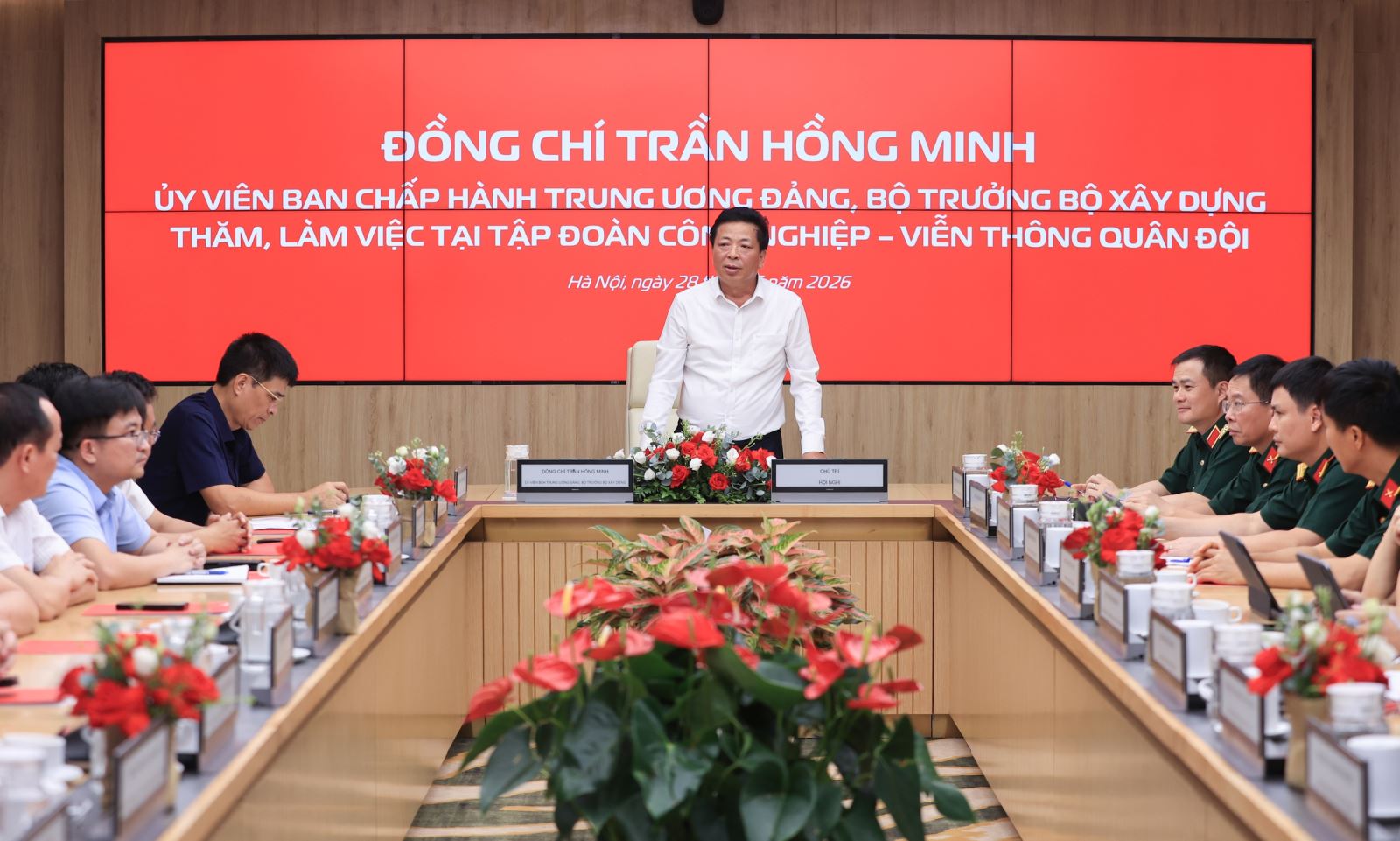
Minister Tran Hong Minh requested that departments, agencies, institutes, universities, enterprises, and experts within and outside the construction sector assigned with tasks and projects coordinate closely with military units and enterprises to ensure rapid and effective implementation with tangible outputs.
Highly appreciating the science and technology research activities of these units, Minister of Construction Tran Hong Minh emphasised that these military units possess extensive experience in science and technology research. Their research activities have been systematically conducted, ranging from foundational technologies such as design and manufacturing to core technologies in materials science and advanced technologies involving electrical and electronic applications. Viettel Group, in particular, has achieved numerous breakthrough technological products across various sectors.
Therefore, to effectively implement the assigned science and technology tasks related to "High-Speed Railway Technology and Urban Railway Technology", the Minister requested that departments, agencies, institutes, universities, enterprises, and experts within and outside the construction sector assigned with specific tasks and projects collaborate closely with experienced organisations.
The objective is to conduct systematic research, ensure rapid and effective implementation, develop concrete products, clearly identify strategic products applicable in practice, and uphold the spirit of self-reliance, self-sufficiency, and technological autonomy.
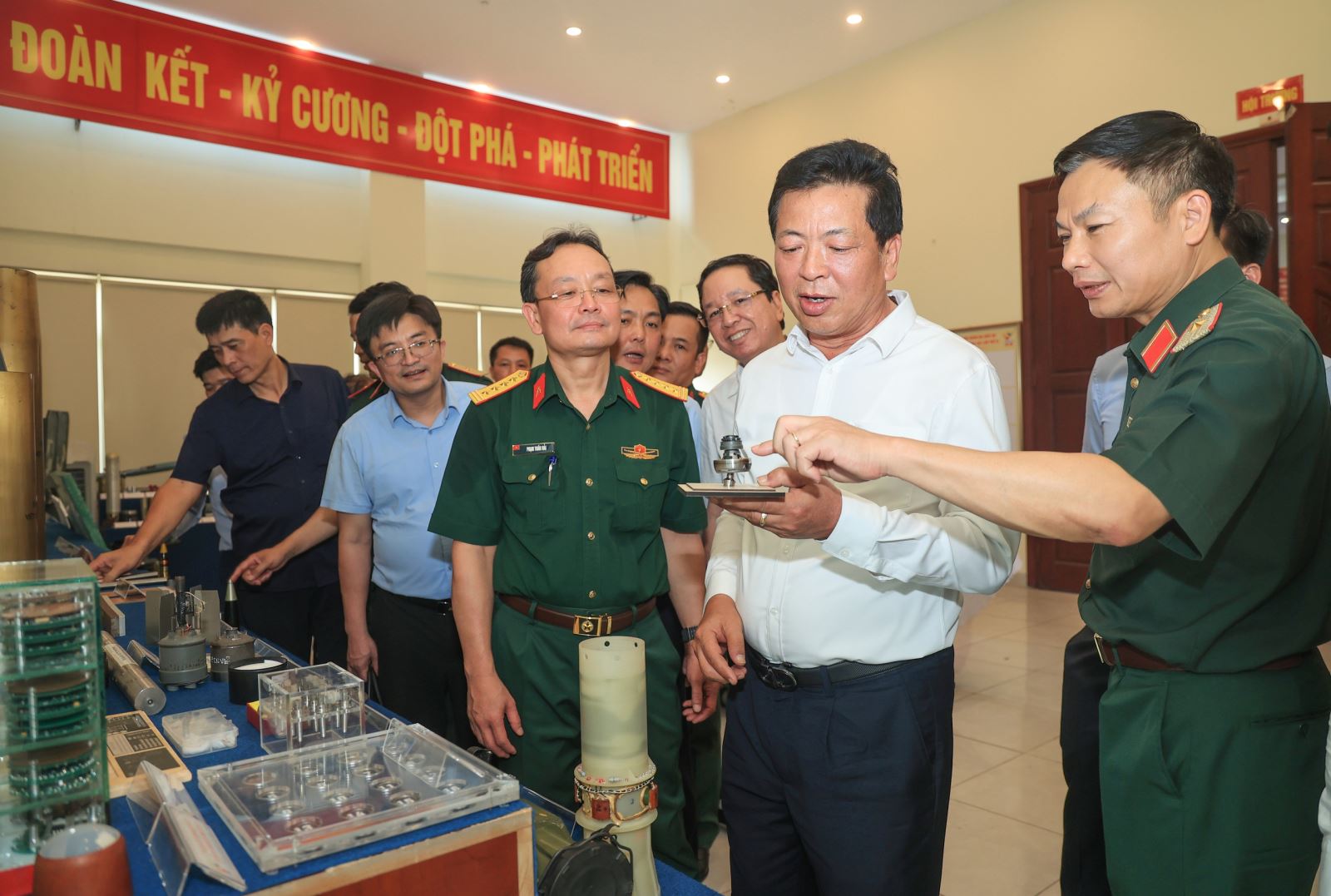
Minister Tran Hong Minh visits technology products developed by the Institute of Technology
Earlier, on the morning of 28 May, the delegation from the Ministry of Construction visited and worked at Z111 Factory in Thanh Hoa Province.
Welcoming the delegation, Colonel Hoang Quoc Vinh, Director of the Factory, stated that the unit is a defence and security enterprise under the General Department of Defence Industry, with functions including research, design, and production of equipment serving national defence and security, as well as dual-use products supporting socio-economic development. The factory currently possesses a closed-loop production line with approximately 1,700 modern pieces of equipment and has mastered numerous advanced technologies in precision engineering, metal processing, heat treatment, electrochemistry, and automation. The factory is capable of participating in research, design, and manufacturing of components and equipment serving railway systems.
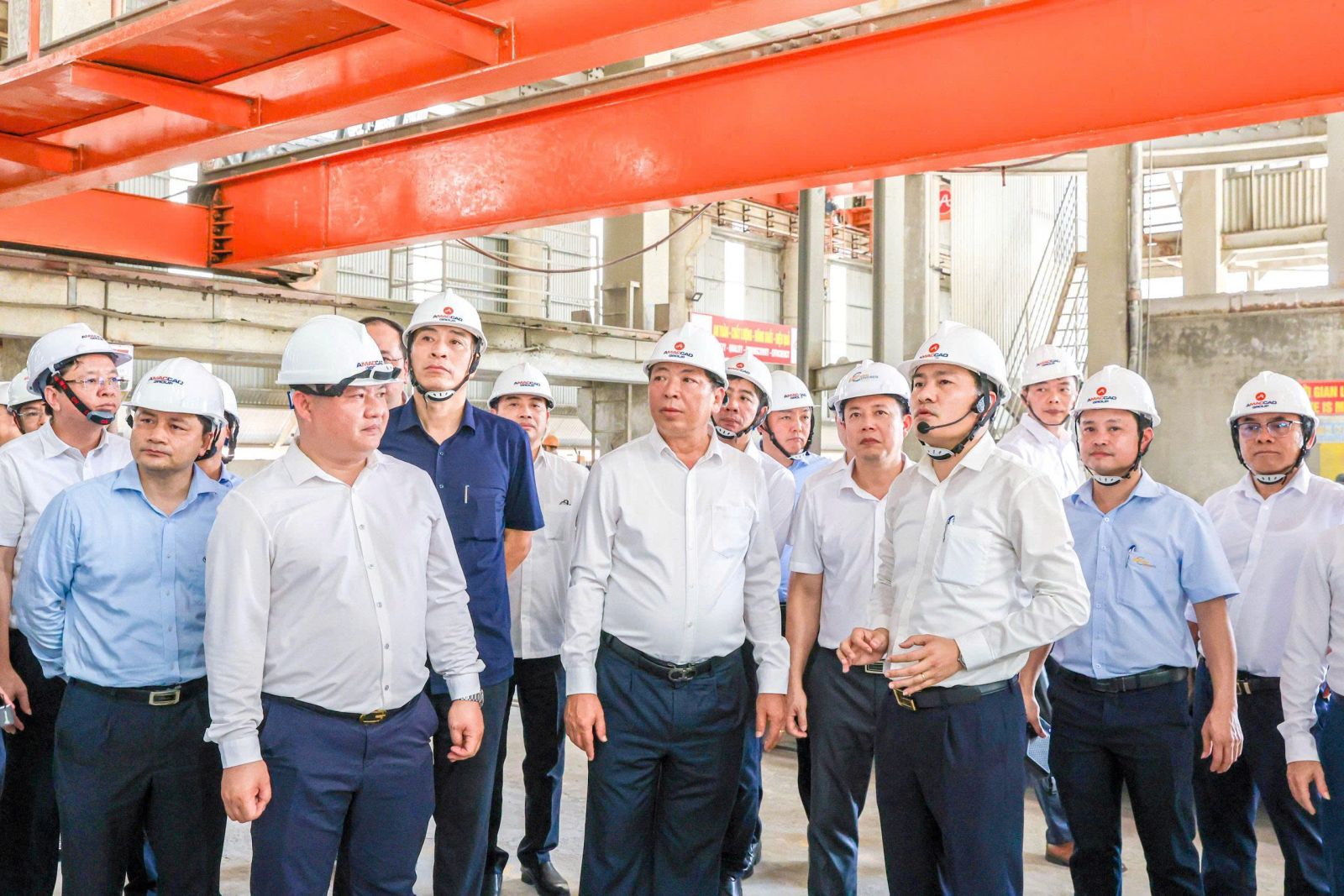
At the working session with the delegation at AMACAO Group in Ninh Binh, Mr. Nguyen Van Vinh, Chairman of the Board of Directors and Chief Executive Officer, stated that the enterprise has proactively promoted automation, technical innovation, quality control, and optimisation of materials, water, and energy use towards greener and more modern construction practices.
According to the enterprise's leadership, investment in technology is not intended solely to create competitive advantages but rather to prepare domestic capabilities capable of meeting the requirements of future mega infrastructure projects.
Developing a Railway Industry Ecosystem
Previously, in implementing Decision No. 21/2026/QD-TTg promulgating the List of Strategic Technologies and Strategic Technology Products, and Decision No. 808/QD-TTg assigning tasks for strategic technology development issued by the Prime Minister, the Ministry of Construction has been urgently developing a programme to implement strategic technology development tasks for the field of "High-Speed Railway Technology and Urban Railway Technology", with the strategic technology product identified as "high-speed railway infrastructure works."
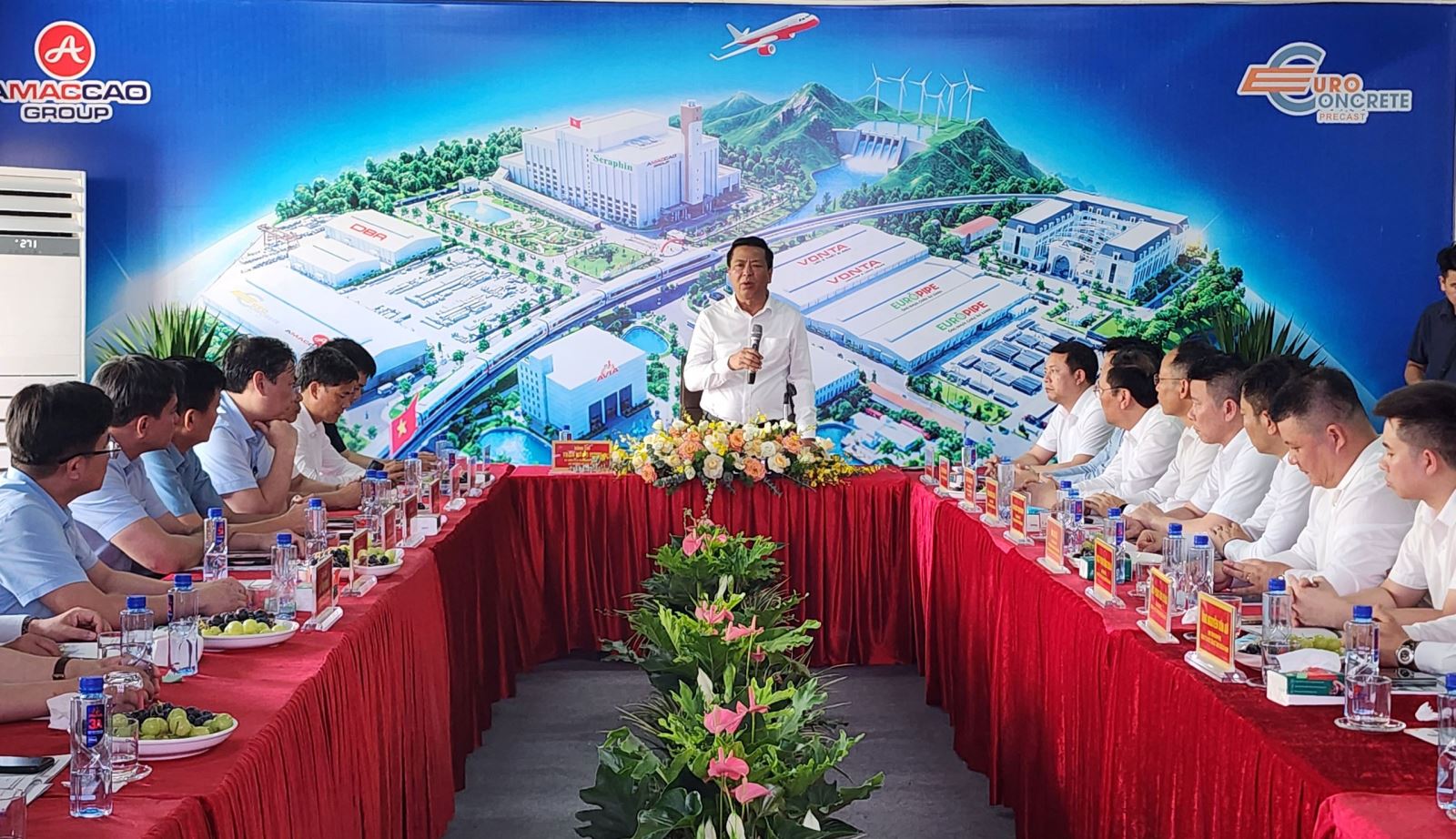
The Minister of Construction proposed that AMACAO Group share experiences in science and technology investment and the application of technologies in producing green materials for infrastructure development.
The Ministry of Construction has organised meetings with relevant units, educational institutions, research organisations, and enterprises to discuss orientations for implementing these tasks. Minister Tran Hong Minh emphasised that developing the Programme for Construction Technology Development for High-Speed Railway Infrastructure is an especially important task with strategic significance for the development of modern transportation infrastructure and national technological self-reliance.
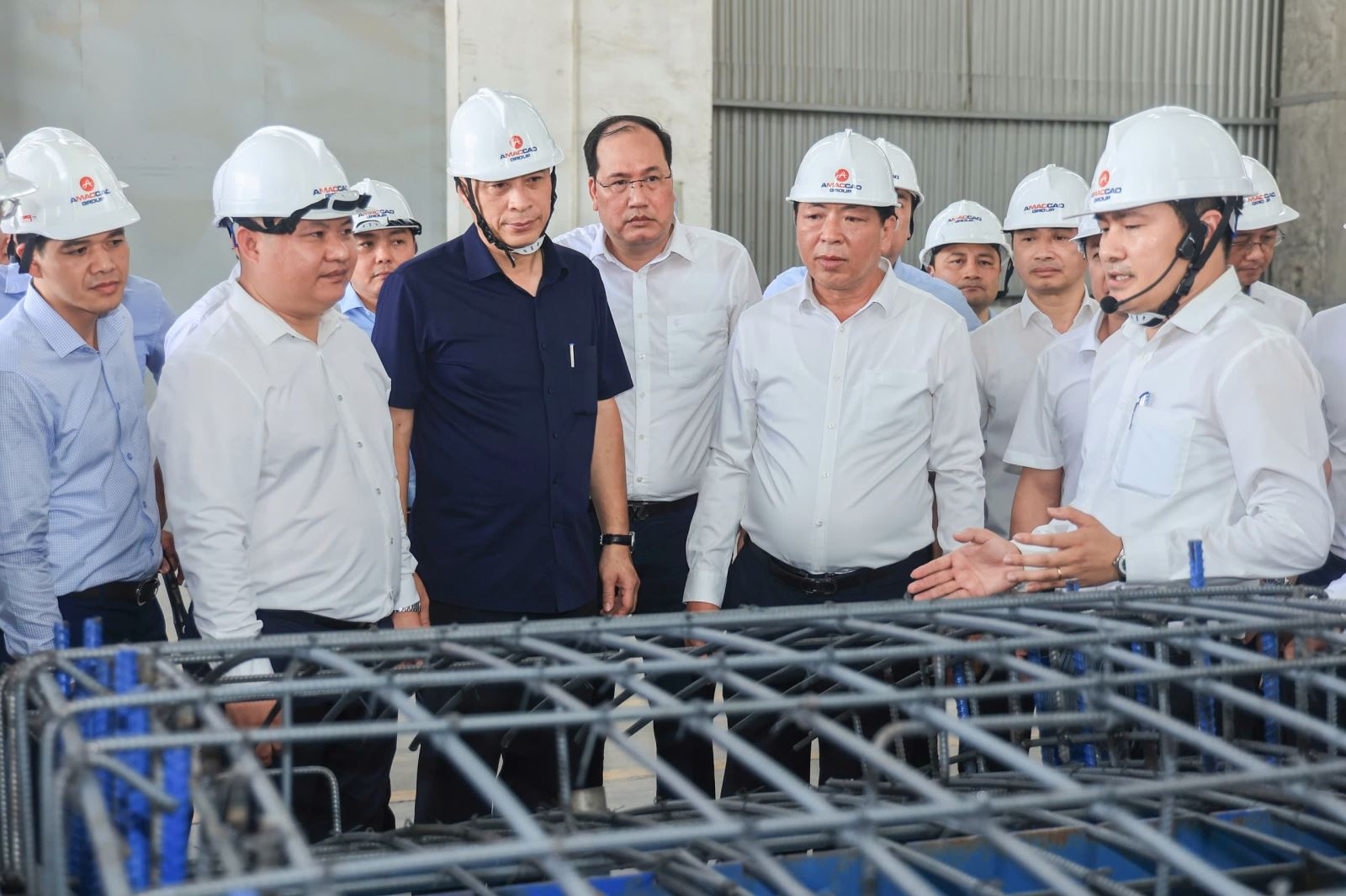
The Minister of Construction conducted field surveys at AMACAO Group's manufacturing facilities in Ninh Binh.
Accordingly, the programme should aim to gradually master technologies related to the construction of high-speed railway infrastructure and electrified railways in Vietnam, covering stages from surveying, design, and construction to component manufacturing, while ensuring compatibility with Vietnam's geological conditions, climate, and domestic industrial capabilities. This approach will gradually strengthen internal capacities and reduce dependence on foreign technologies, consultants, and contractors throughout the entire project lifecycle.
The Minister requested that the implementation of tasks strictly adhere to Decision No. 21 and Decision No. 808 of the Prime Minister, ensuring practicality, feasibility, clear priorities, and well-defined implementation roadmaps and deliverables associated with the deployment requirements of high-speed railway projects and Vietnam's objective of progressively mastering relevant technologies. At the same time, these efforts should contribute to developing endogenous capabilities, establishing a railway industry ecosystem, and enhancing practical application capacities to support the implementation of high-speed railway projects in the coming period.
Accordingly, the Minister requested that relevant agencies, units, and enterprises urgently conduct research and propose the implementation of 13 key task groups, with specific responsibilities assigned to each unit for execution and implementation.
Source: Construction Newspaper


