


Scientific Seminar on Climate-Resilient Geotechnics in Construction Engineering
On 10 January 2026, the Division of Construction Geotechnics and Metro Engineering, Faculty of Civil Engineering, successfully organized a scientific seminar entitled “Climate-Resilient Geotechnics in Construction Engineering.”
The seminar served as a meaningful academic forum, bringing together domestic and international experts, lecturers, researchers, doctoral candidates, and students to exchange perspectives on geotechnical challenges and solutions in the context of climate change, which is increasingly exerting significant impacts on construction works and transport infrastructure.
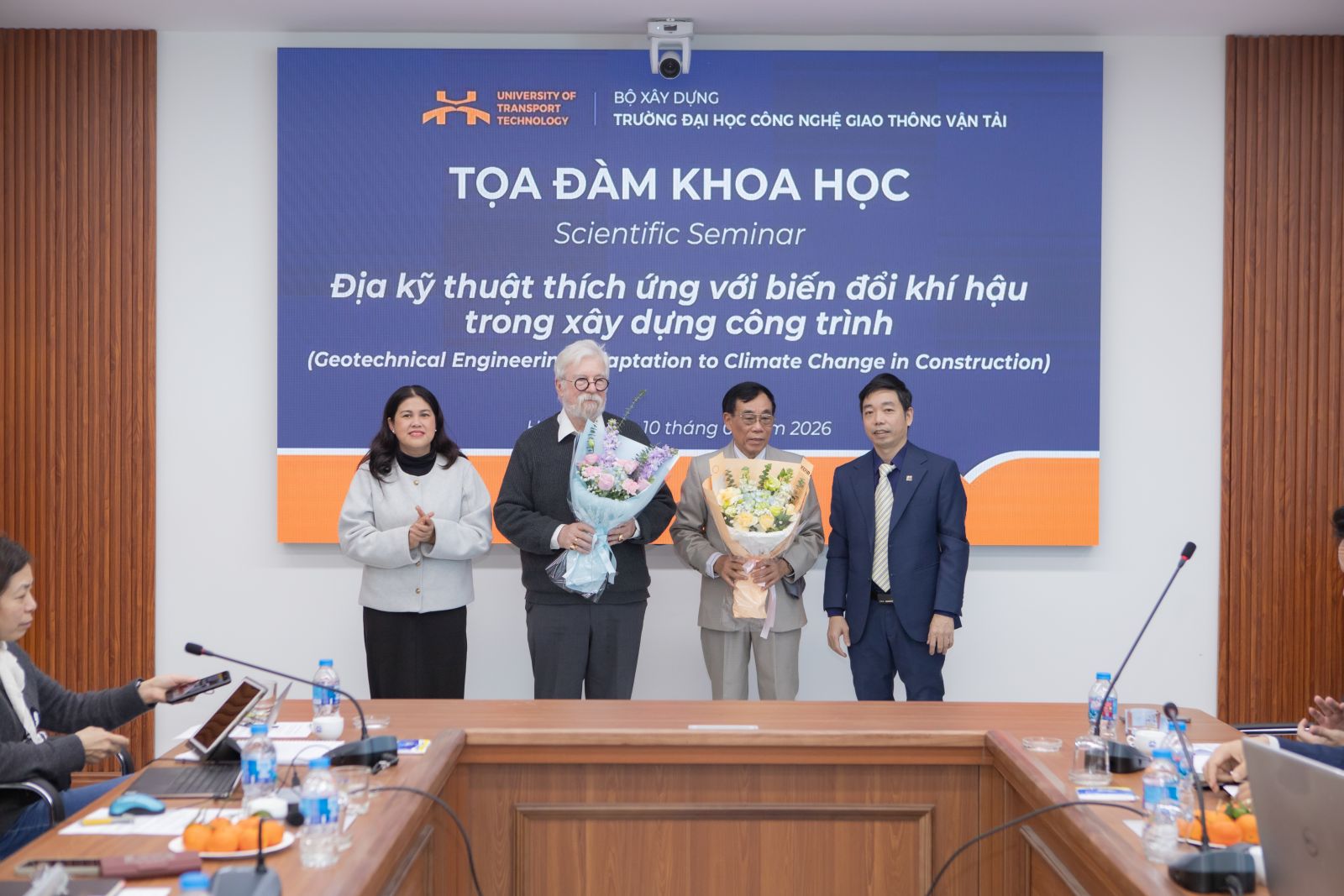
Representatives of the Department of Science, Technology and International Cooperation and the Faculty of Civil Engineering presented flowers to the invited speakers.
Opening the seminar’s dynamic academic program, Dr. Jasper Cook, an engineering geology and geotechnical consultant from the United Kingdom, delivered a keynote presentation titled “Engineering Geology and Climate-Resilient Transport Infrastructure.”
With more than 50 years of experience in engineering geology, geotechnics, and climate change adaptation, Dr. Cook has participated in and led numerous major projects across Africa and Asia, and currently serves as a consultant to the World Bank on climate resilience projects, including those implemented in Vietnam.
In his presentation, Dr. Cook introduced modern approaches to climate change adaptation, including the Observational Method (OM) in design, as well as innovative approaches to hydrological analysis that go beyond reliance on historical data by incorporating projected future trends. These analyses underscored the urgent need to rethink geotechnical design toward greater flexibility and adaptability.
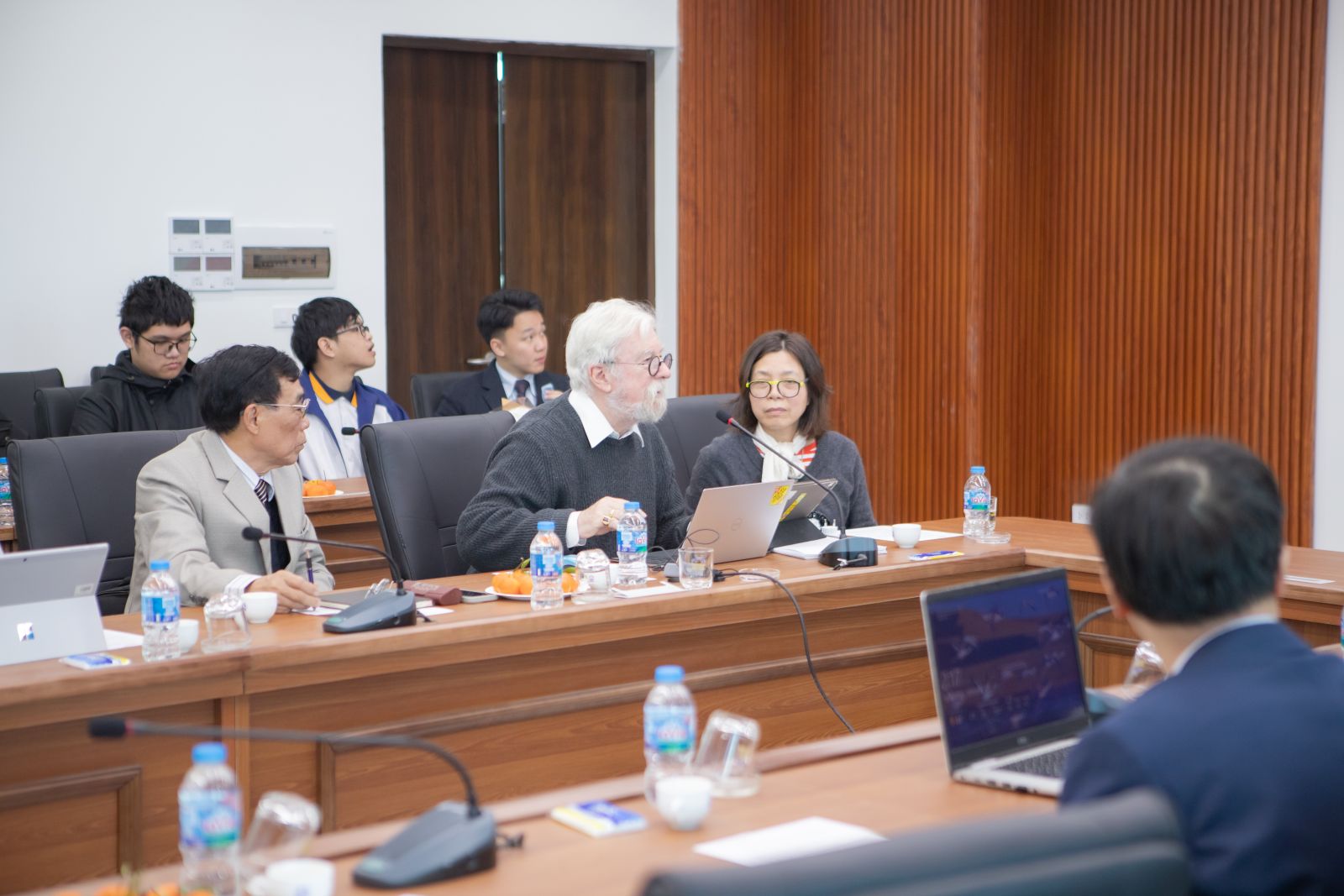
Dr. Jasper Cook presenting “Engineering Geology and Climate-Resilient Transport Infrastructure” at the seminar.
Subsequently, Geotechnical Expert Nguyễn Đình Thứ provided a practical perspective through his presentation entitled “Evaluating the Effectiveness of Soft Ground Improvement Techniques in the Hanoi–Hai Phong Expressway Project.” The presentation focused on lessons learned in soft soil treatment, covering aspects such as the selection of input parameters, the deployment of monitoring systems, and the evaluation of discrepancies between design calculations and actual field conditions.
Based on an extensive dataset from the Hanoi–Hai Phong Expressway Project, the study offered in-depth analyses of the effectiveness of solutions such as prefabricated vertical drains (PVDs), sand drains, and sand compaction piles, thereby highlighting the critical role of monitoring and design adjustment in enhancing foundation reliability and adaptability.
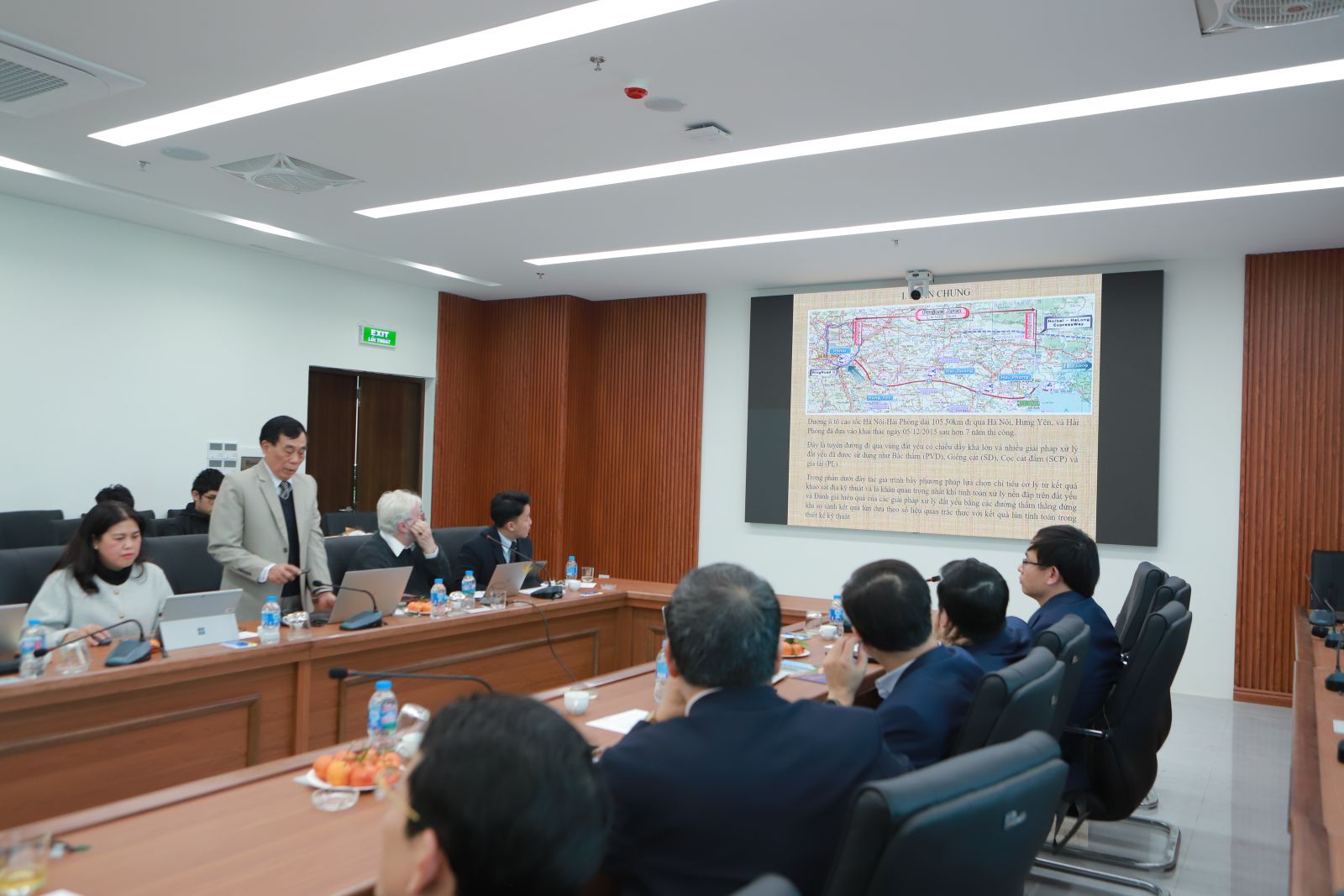
Geotechnical Expert Nguyễn Đình Thứ presenting “Evaluating the Effectiveness of Soft Ground Improvement Techniques in the Hanoi–Hai Phong Expressway Project.”
Offering another research perspective, Assoc. Prof., Dr. Hồ Sĩ Lành presented findings from the study “Study on the Mechanical Properties and Durability of Geopolymer-Stabilized Laterite Soil.” The research examined the effectiveness of geopolymer stabilization of laterite soils, with particular emphasis on the influence of multiple wet–dry cycles on laboratory specimens.
This approach enables a more comprehensive assessment of long-term soil improvement performance under conditions of frequent flooding and drainage, which are becoming increasingly common due to extreme rainfall events associated with climate change. The study not only provides technical value but also promotes environmentally friendly solutions, aligned with sustainable development trends.

Assoc. Prof., Dr. Hồ Sĩ Lành – Deputy Head of the Division of Construction Geotechnics and Metro Engineering, Faculty of Civil Engineering, presenting at the seminar.
Concluding the series of thematic presentations, MSc., PhD Candidate Lê Văn Hiệp delivered a report entitled “Correlation between Elastic Modulus (E₅₀) and Unconfined Compressive Strength (qᵤ) of Binder-Stabilized Surface Soils in the Mekong Delta.” The presentation focused on experimental research results concerning key mechanical properties of weak soils in the Mekong Delta after stabilization using cement combined with additives. The proposed correlations demonstrate high practical applicability, effectively supporting the design and evaluation of soft ground improvement solutions in regions heavily affected by climate change and sea-level rise.
.jpg)
MSc., PhD Candidate Lê Văn Hiệp – Lecturer, Faculty of Civil Engineering, presenting at the seminar.
Through these in-depth presentations, the seminar highlighted the close interconnection between scientific research, practical experience, and climate change adaptation requirements in the field of geotechnics. Although approached from different perspectives, all presentations converged on a shared objective: enhancing the sustainability and resilience of construction works and transport infrastructure in the face of current and future climate challenges. Beyond fostering academic exchange, the seminar also strengthened the linkage between research and practice, while opening new avenues for research collaboration for the Faculty of Civil Engineering in the coming period.
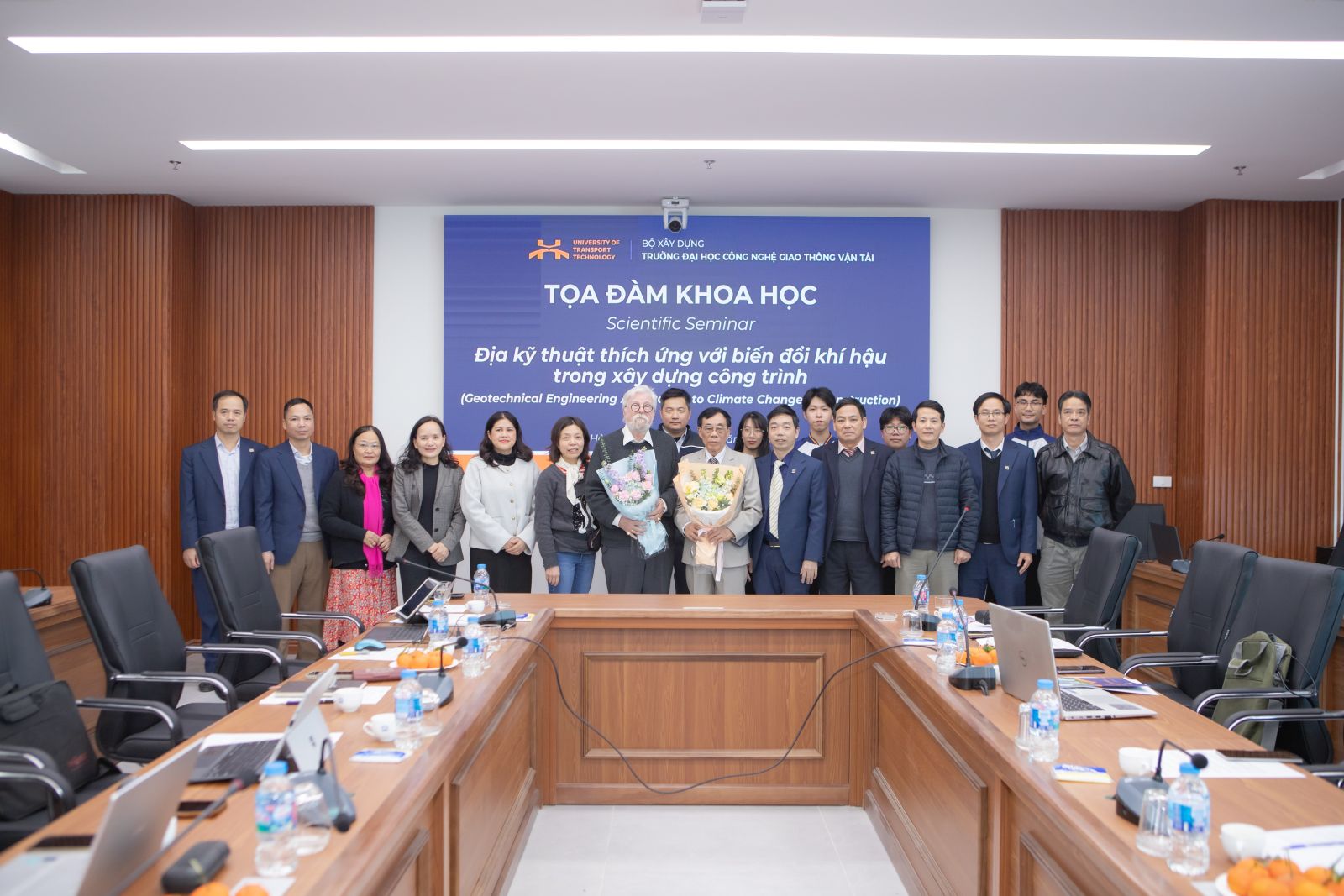
Scientists, experts, lecturers, and students taking a commemorative photo at the seminar.
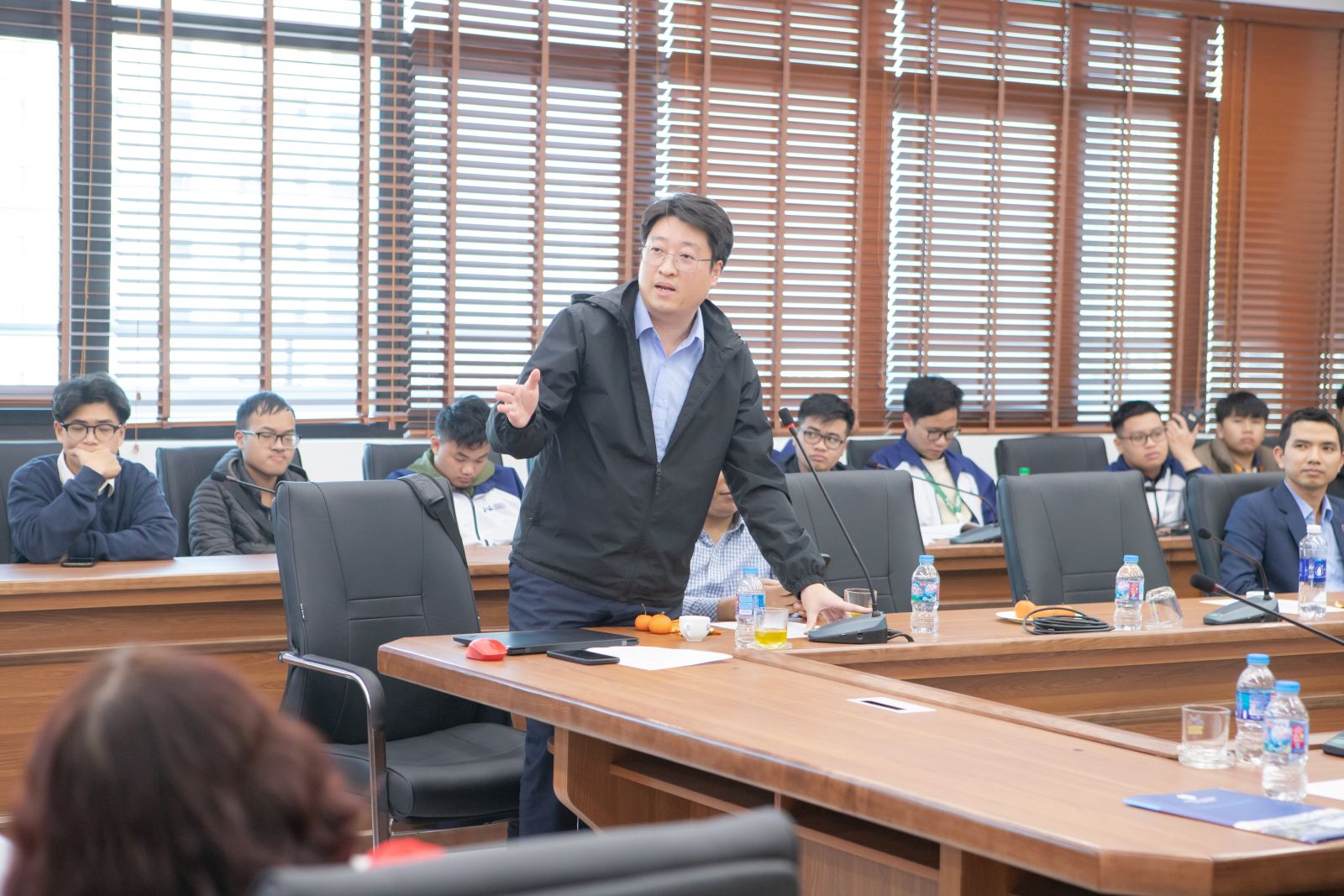
Some photos of the seminar:
.JPG)
.jpg)
Division of Construction Geotechnics and Metro Engineering - Faculty of Civil Engineering


