


Scientific Workshop: Multi-Hazards and Infrastructure Safety in the Context of Climate Change
On August 20, 2026, in Hanoi, the University of Transport Technology, in collaboration with the Institute of Earth Sciences under the Vietnam Academy of Science and Technology, organized the scientific workshop "Multi-Hazards and Infrastructure Safety in the Context of Climate Change."
Attending the workshop, on the side of the Institute of Earth Sciences, were Prof. Dr. Phan Trong Trinh, Editor-in-Chief of the Journal of Earth Sciences; Assoc. Prof. Dr. Dao Dinh Cham, Editor-in-Chief of the Journal of Marine Science and Technology; Assoc. Prof. Dr. Doan Quang Tri, Director of the Multidisciplinary Monitoring Center; Dr. Vuong Hong Nhat, Head of the Environmental Landscape Department; together with Associate Professors, Doctors, and scientists who are principal researchers of the Institute. On the side of the University were Dr. Tran Thanh An — Vice-Rector; Assoc. Prof. Dr. Ngo Thi Thanh Huong, Head of the Department of Science, Technology and International Cooperation; Dr. Tran Ngoc Hung — Director of the Institute of Transport Technology, concurrently in charge of the Faculty of Civil Engineering; along with representatives of unit leadership and other scientists and lecturers.
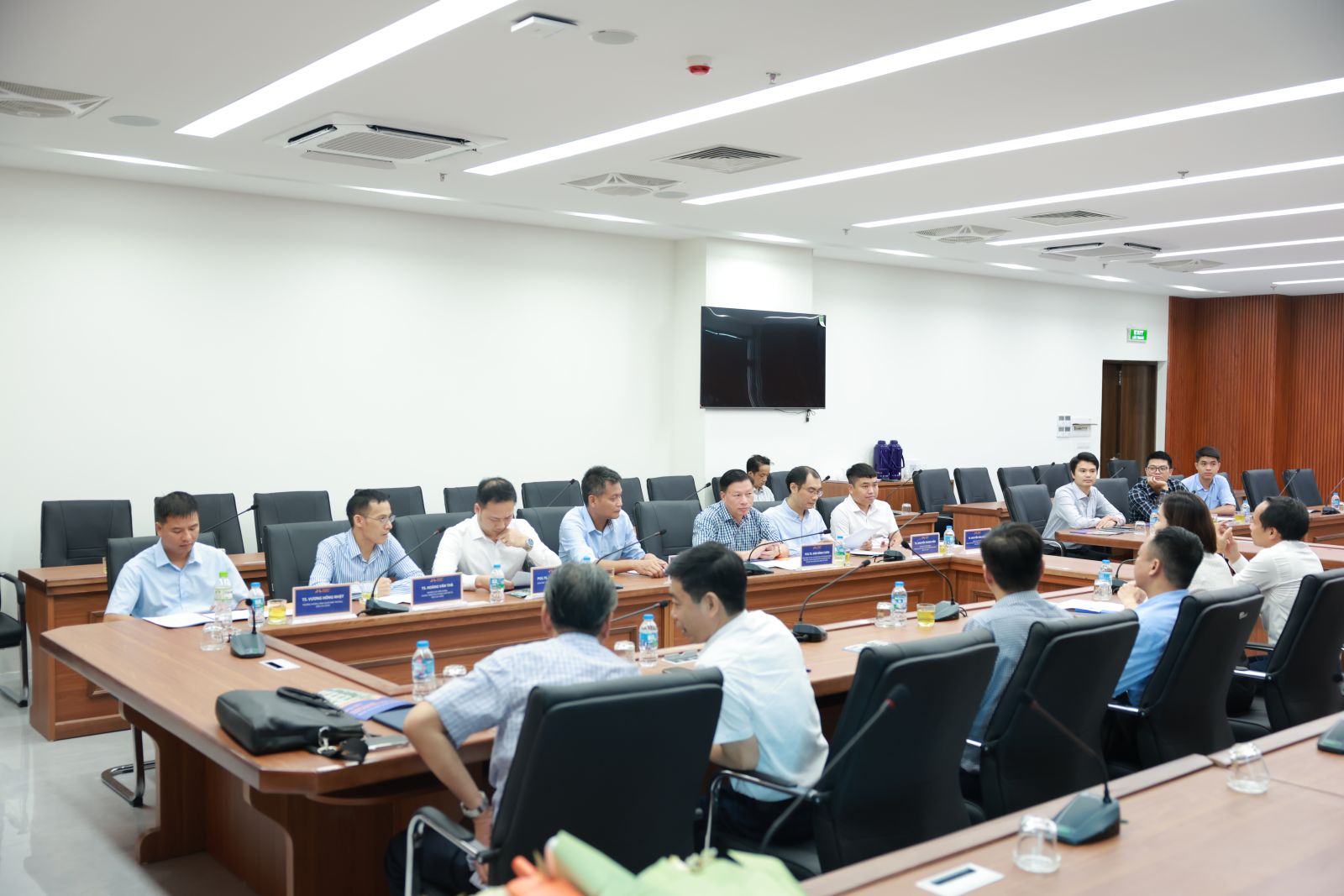
A panoramic view of the workshop
Delivering the opening remarks, Dr. Tran Thanh An — Vice-Rector of the University — sincerely thanked the delegates, experts, and scientists for their presence, while emphasizing that, amid increasingly extreme, complex, and highly interactive natural disasters, single-discipline approaches are revealing certain limitations. Accurately researching, assessing, and forecasting disaster risks — especially phenomena such as landslides, flash floods, and geological hazards — is of great significance for the planning, design, and construction of works, and for enhancing the resilience of infrastructure systems.
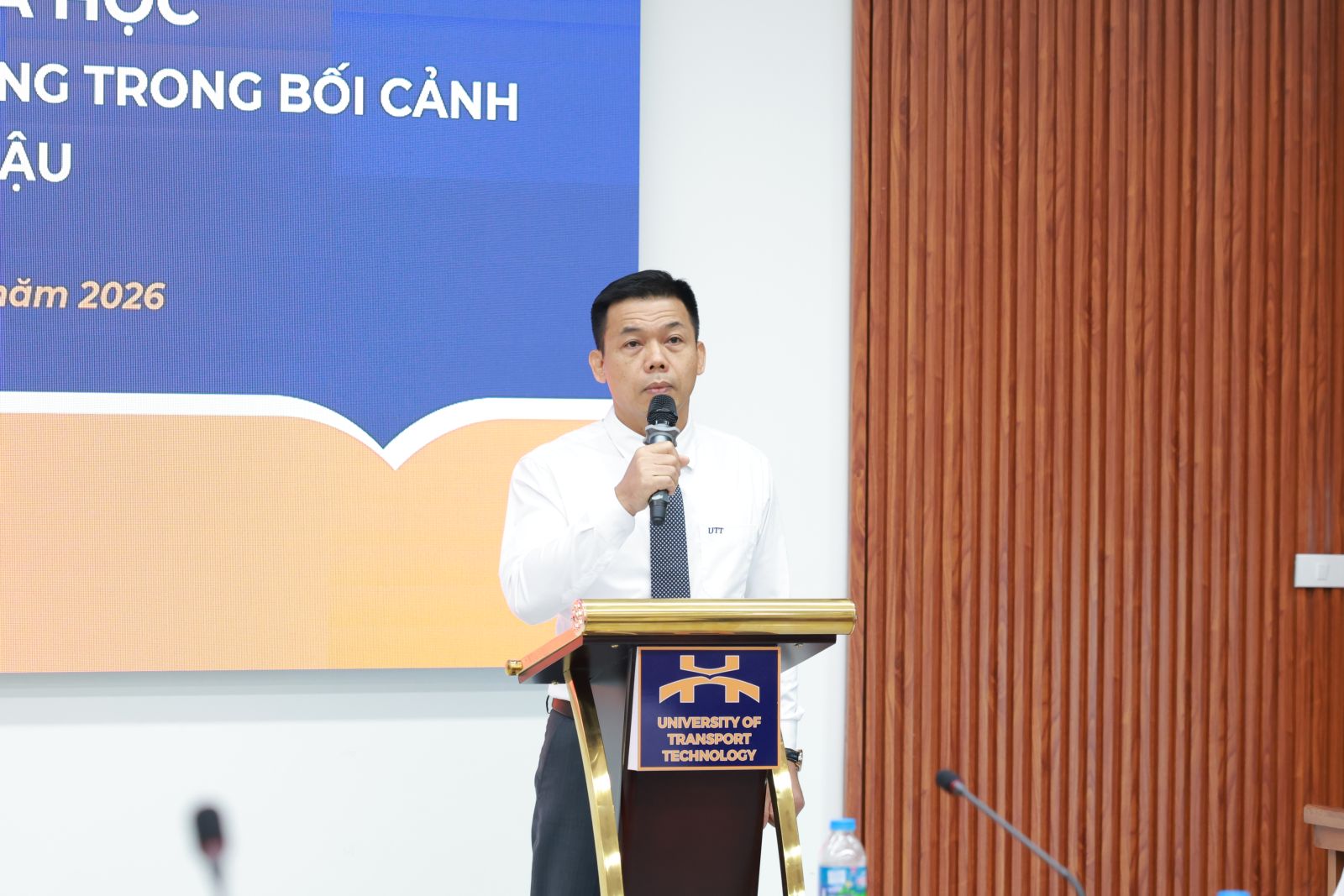
Dr. Tran Thanh An — Vice-Rector of the University — delivering the opening remarks at the workshop
On this occasion, on behalf of the University, Dr. Tran Thanh An presented flowers to congratulate the speakers, while also expressing the wish that the cooperative relationship between the University and the Institute would continue to be strengthened and developed in a substantive and effective manner, moving toward the implementation of joint research programs and tasks and the creation of valuable scientific results in service of sustainable development.
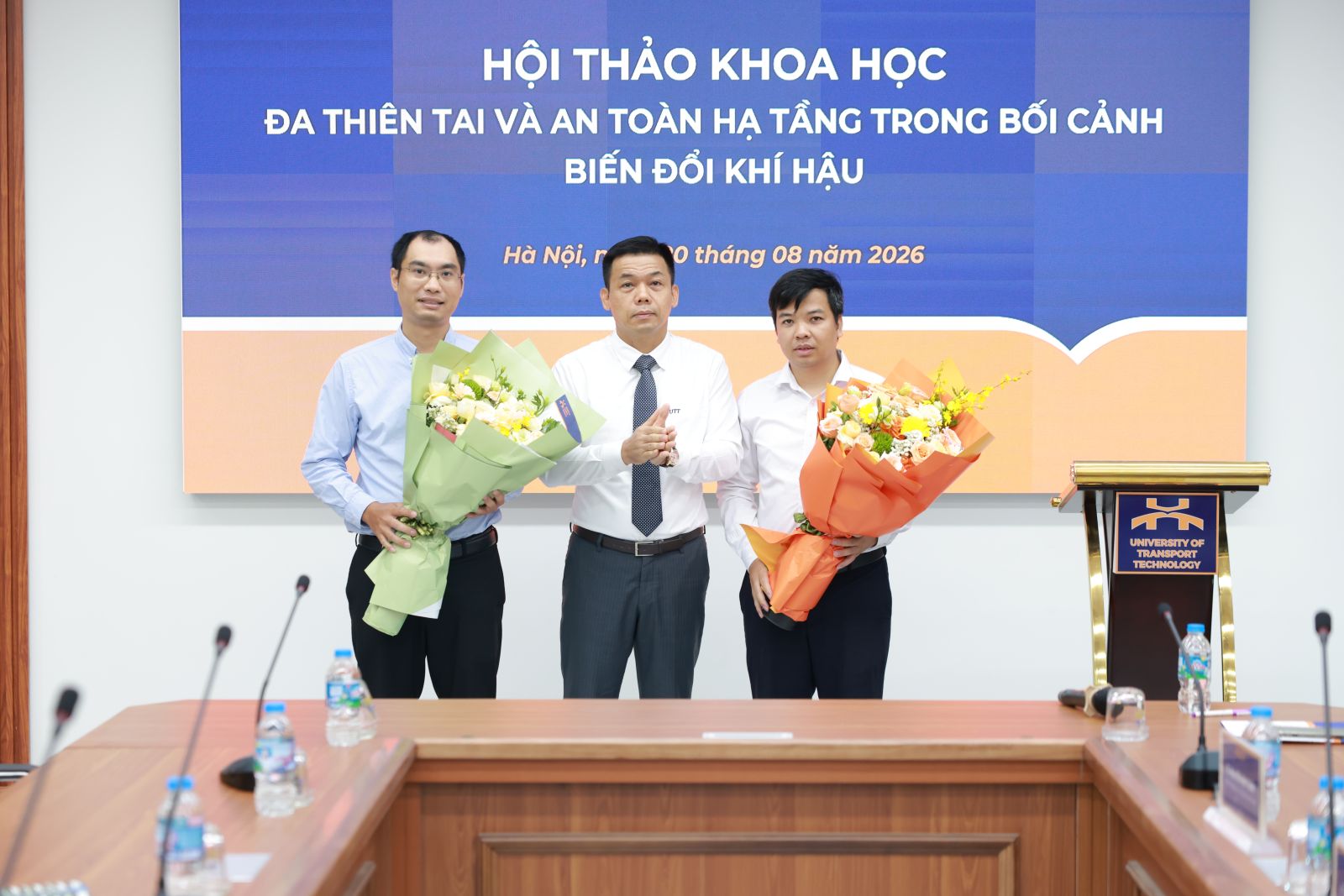
Dr. Tran Thanh An presenting flowers to congratulate the speakers
Opening the technical session, Dr. Nguyen Trung Kien — Principal Researcher, Institute of Earth Sciences — presented the report "Assessing the Impact Range of a Landslide Mass or a Flash Flood – Debris Flow on Construction Works: Some Typical Examples." The report clarified the extent of influence and the level of impact of landslides and flash floods – debris flows on construction works, based on statistical–empirical methods and numerical models, with real-world cases in Lao Cai such as the landslide mass in the Sa Pa Water Plant area and Vu Lung Sung village, and the debris-flow events at Mong Sen Stream and Nam Cang Stream.
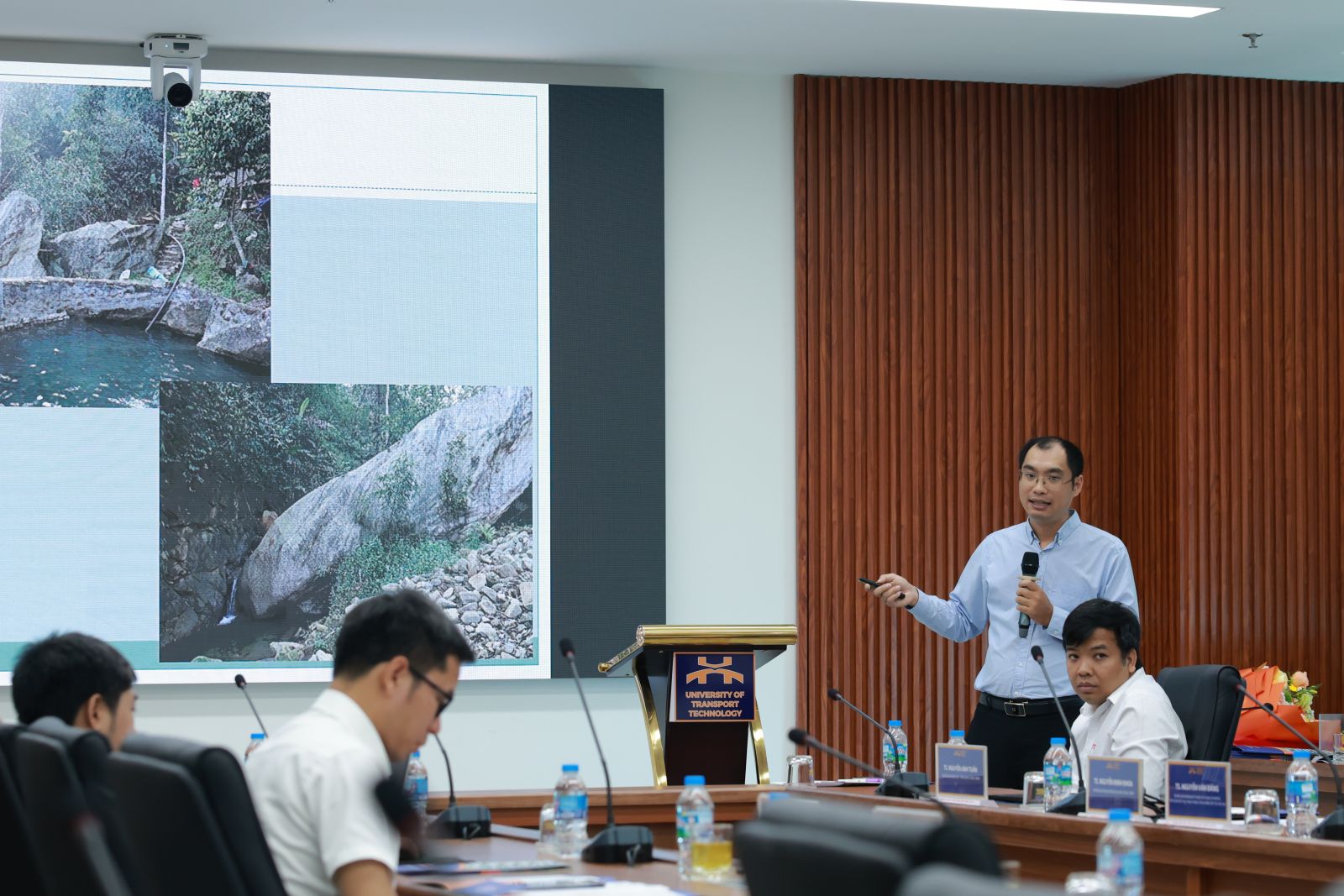
Dr. Nguyen Trung Kien — Institute of Earth Sciences — presenting his report
Continuing the program, Dr. Nguyen Duc Dam — Electronic Journal of Transport Science and Technology, University of Transport Technology — presented the report "Developing a Multi-Hazard Risk Map Using Deep Learning Models: A Case Study in Dak Lak Province, Vietnam." The research clarified the current distribution of the main disaster types — including landslides, flash floods, and soil erosion — analyzed the influencing factors, and applied deep learning models in building multi-hazard zoning maps. The research results contribute a scientific basis for identifying areas with high sensitivity to multi-hazards, supporting the planning, management, and development of transport infrastructure in a safe and sustainable direction.
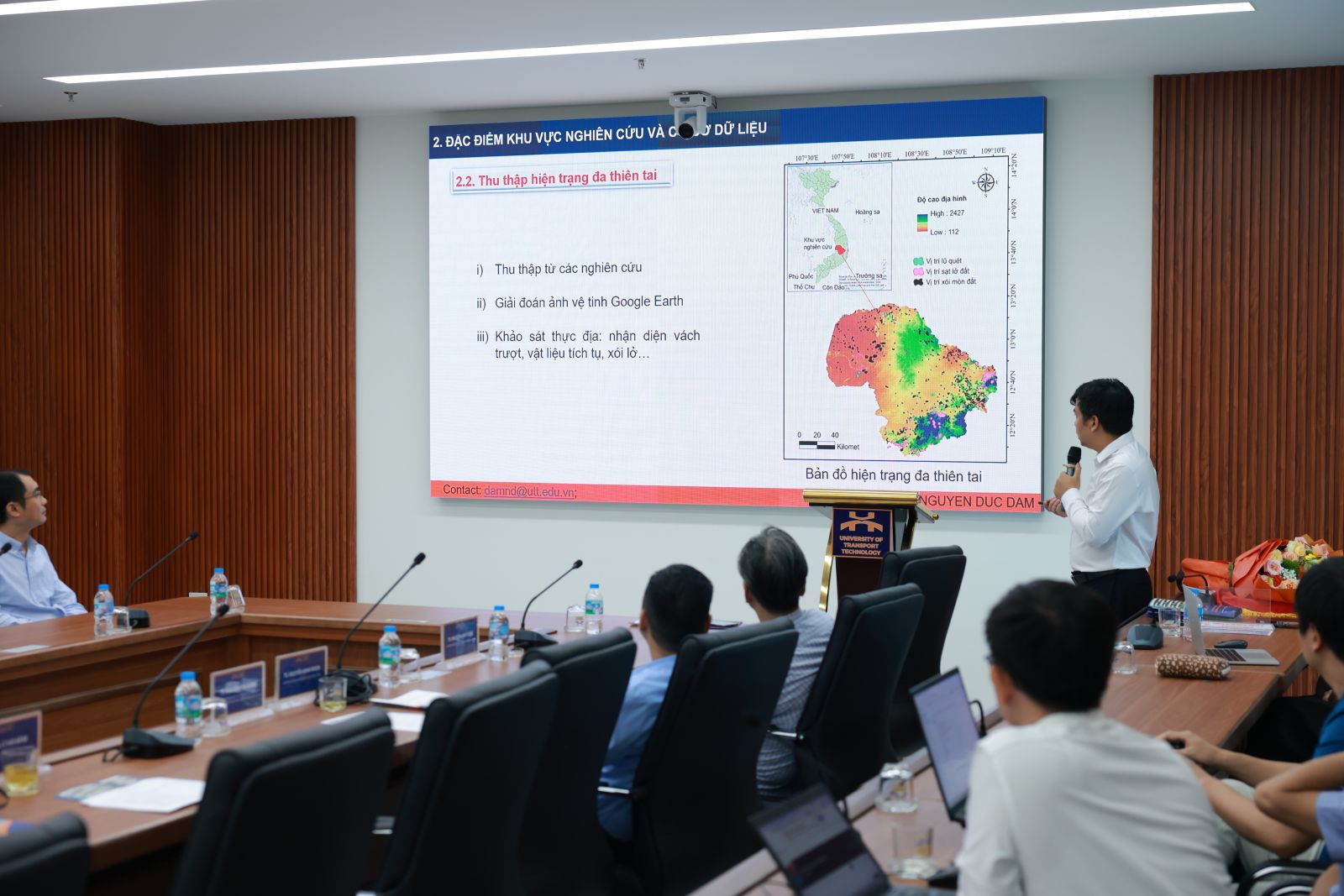
Dr. Nguyen Duc Dam — University of Transport Technology — presenting his report
During the discussion session, delegates exchanged views on the impact of multi-hazards on infrastructure, the applicability of numerical models and artificial intelligence in assessing, forecasting, and zoning risks, as well as directions for developing applied research to improve the effectiveness of disaster prevention and risk mitigation and to ensure the safety of infrastructure works.
At the close of the program, representatives of the University's leadership praised the results achieved at the workshop, providing an important basis for strengthening research coordination, building interdisciplinary research groups, proposing science and technology tasks, developing training programs, and expanding professional cooperation between the two units.
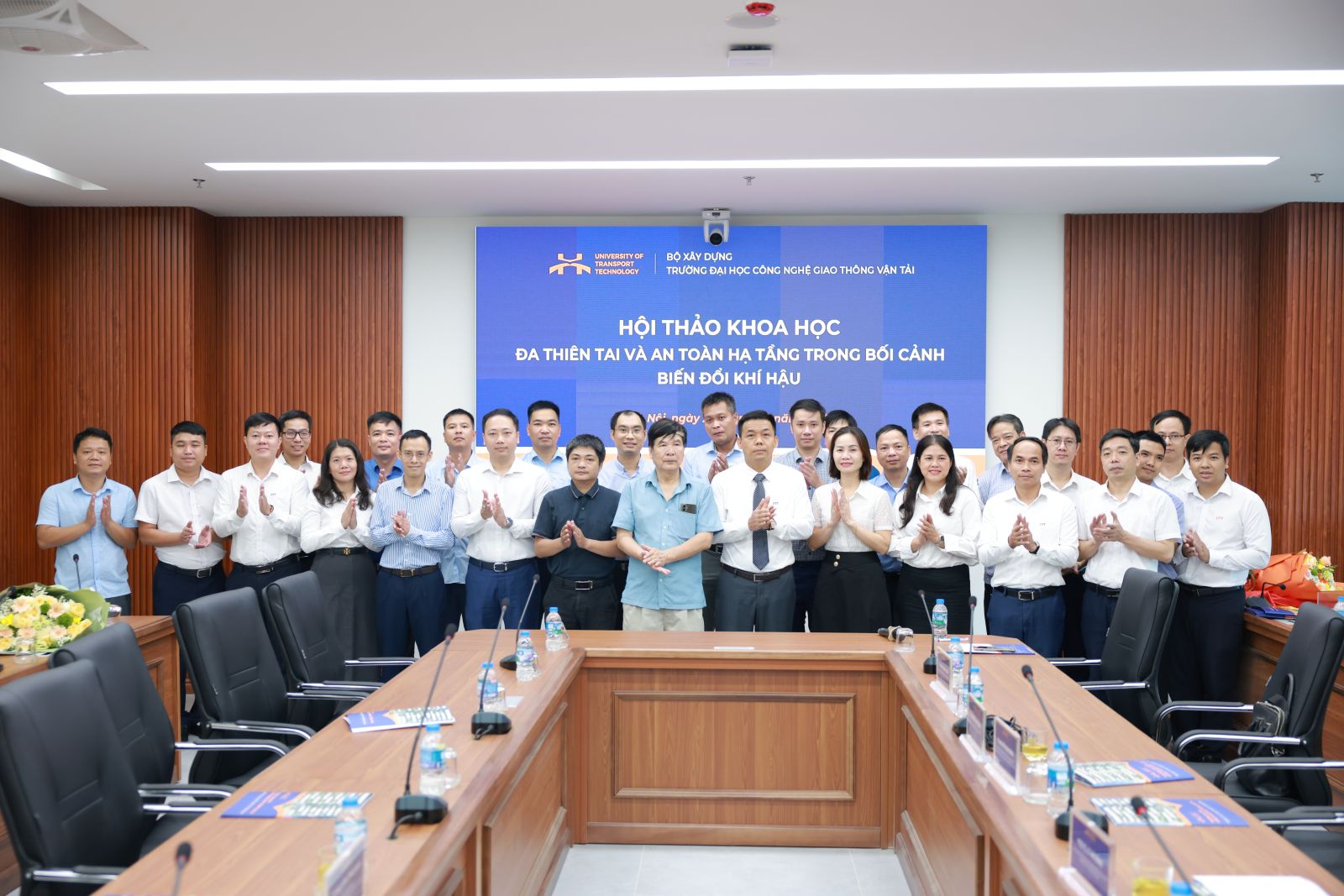
Delegates taking a commemorative photo at the workshop


