


International Symposium on Expressway Technology 2023
On the morning of December 13, the University of Transport Technology (UTT), in collaboration with Central Nippon Expressway Engineering Tokyo Company Limited (NEXCO–Tokyo, Japan), organized the International Symposium on Expressway Technology 2023 with the aim of sharing and exchanging experiences in quality control during construction, operation management, and maintenance of expressway systems.
Attending the symposium, from NEXCO–Tokyo, were Mr. Hideaki Motohashi – Director of Human Resources, and Mr. Ryo Sato – Head of the Human Resources Department.
From Deo Ca Group, there were Mr. Trần Chủng – Vice Chairman of the Advisory Council; Mr. Mai Mạnh Hồng – Assistant to the Chairman of the Board of Directors; Mr. Lê Châu Thắng – General Director of Deo Ca Expressway Management and Operation Joint Stock Company, along with representatives of leadership from affiliated units within the Group.
The event also welcomed Mr. Pham Van Doan – Deputy Director of the Project Management Board for Transport Infrastructure Construction Investment, Hanoi City.
From the University of Transport Technology, the event was attended by Dr. Nguyễn Mạnh Hùng – Vice Rector; Dr. Nguyễn Văn Lâm – Vice President; representatives of leadership from various faculties, departments, institutes, and centers across the University, as well as numerous students with a keen interest in the field.
Also participating in the symposium were representatives from agencies, project management boards, universities, research institutes, Vietnamese and international enterprises, sponsors, media agencies, and notably, scholars and scientists from around the world.

The symposium attracted the participation of numerous leading experts and scientists.
In his opening remarks, Dr. Nguyễn Mạnh Hùng emphasized that the development of expressways is a top priority in Vietnam’s national transport development strategy. The goal is to complete approximately 3,000 kilometers of expressways by 2025 and 5,000 kilometers by 2030. This ambitious target presents significant challenges, particularly in terms of quality control over construction materials, surveying, design, execution, as well as the management, operation, and maintenance of the national expressway system.
As a center for training, research, and technology transfer, the University of Transport Technology has, in recent years, continuously enhanced its international cooperation activities, including a strong partnership with Central Nippon Expressway Engineering Tokyo Company Limited. Over the past decade, the two sides have co-organized numerous joint academic conferences, and dozens of faculty members from UTT have had the opportunity to visit and study expressway projects in Japan..

Dr. Nguyễn Mạnh Hùng – Vice Rector of UTT delivered his remarks at the symposium
At the symposium, the presentations delivered by guest speakers and scholars focused on in-depth analysis and evaluation of key issues such as: inspection and monitoring of expressways in Japan; emergency response to slope failures in disaster assessment; methods for maintenance inspection and management of expressway bridges and roads; experimental research and simulation of physical and mechanical properties of asphalt concrete using nano graphene oxide additives; innovative approaches to enhancing tunnel repair and disaster prevention; and the application of Mobile Lidar solutions in surveying and assessing surface conditions of expressways, etc.


Guest speakers and scholars presented their research and insights at the symposium.
Following the presentations, under the moderation of Dr. Ngo Thi Thanh Huong – Head of the Office of Science, Technology and International Cooperation, the delegates engaged in an active and constructive discussion session. Numerous opinions and critical feedback were raised to further clarify and elaborate on the issues presented in the reports.

Dr. Ngô Thị Thanh Hương – Head of the Office of Science, Technology and International Cooperation – chaired the discussion session.
The discussion also revolved around practical experiences in tunnel fire prevention and firefighting in Japan; comparisons of long-term durability and methods for inspection and maintenance of road, bridge, and tunnel infrastructure between Vietnam and Japan.
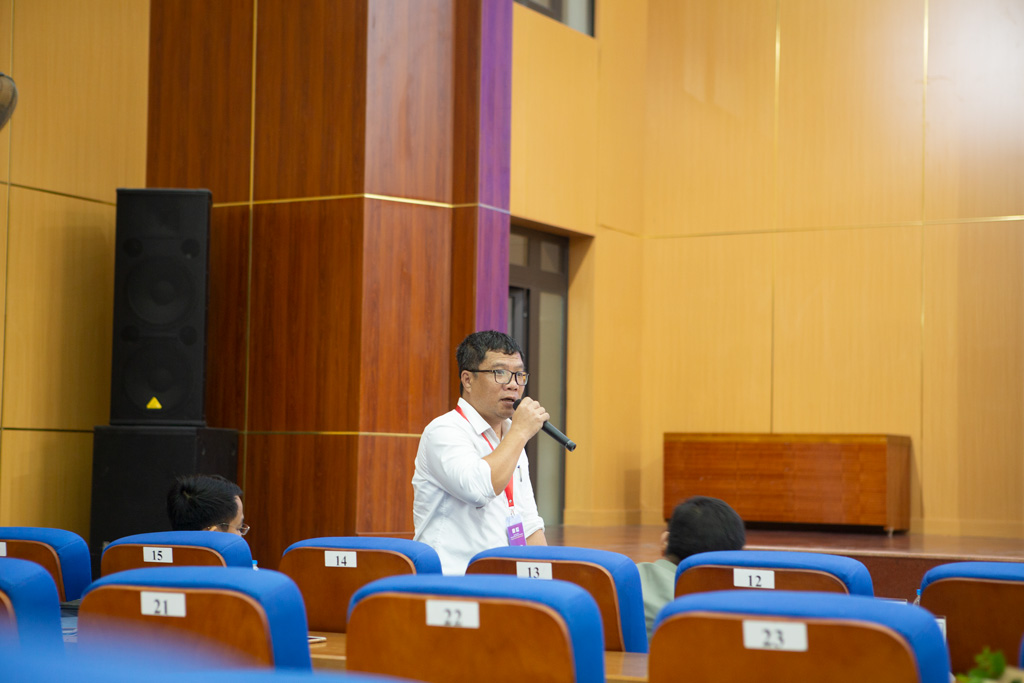
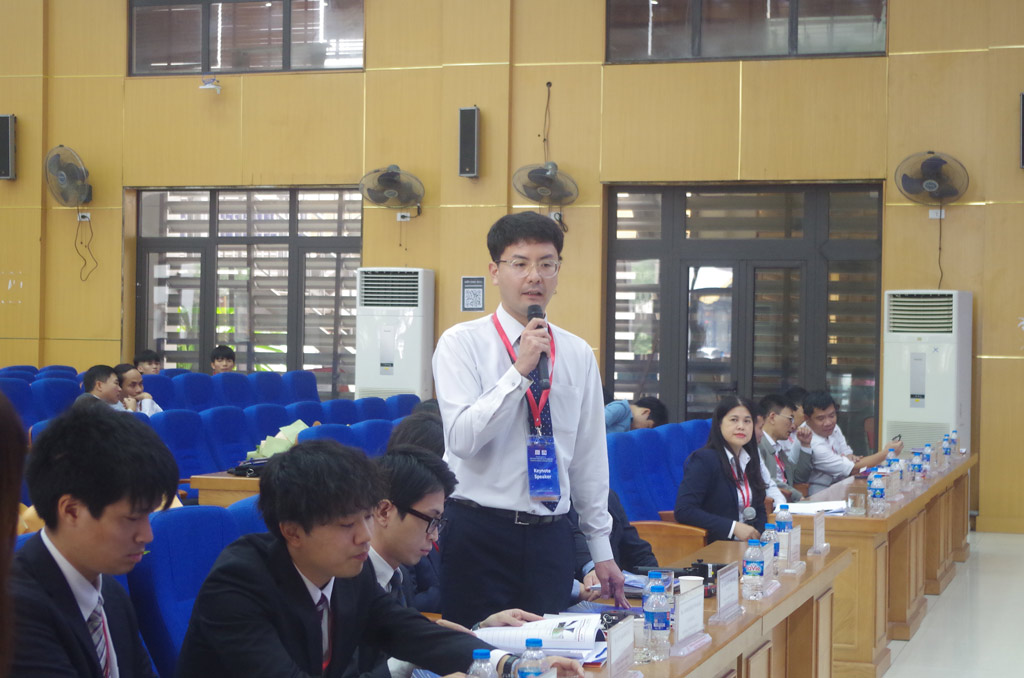
Delegates actively exchanged and contributed ideas during the discussion session.
It is hoped that the symposium will serve as an academic forum for policymakers, researchers, scientists, and businesses from both countries to exchange knowledge, share practical experiences—especially those from Japan—and thereby draw valuable lessons for the construction, operation, and maintenance of expressways in Vietnam.
.jpg)
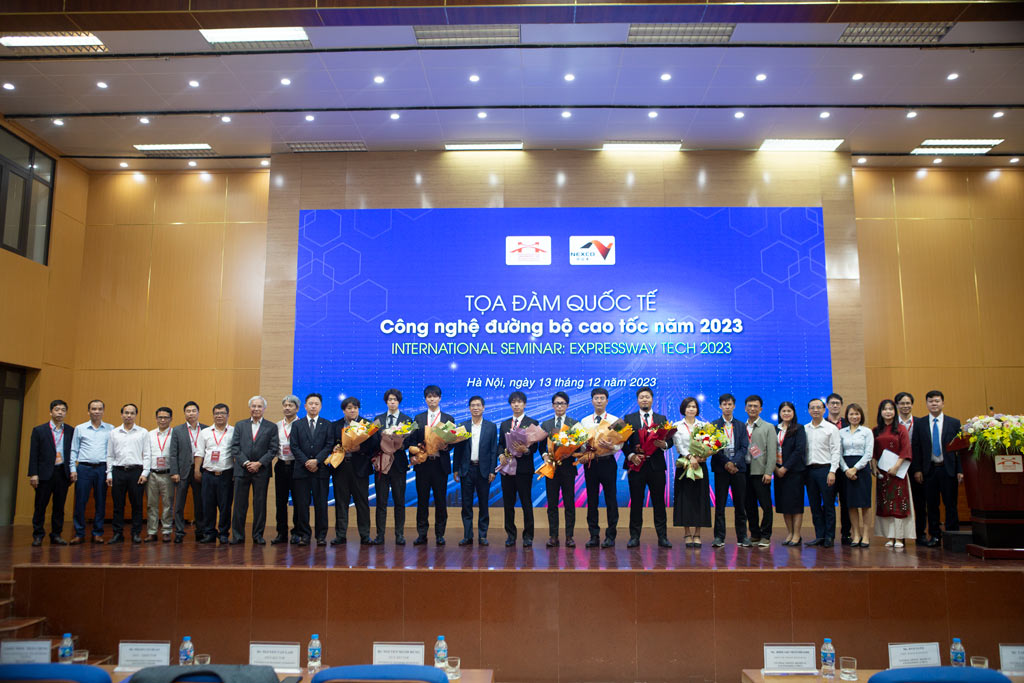
Delegates took commemorative photos at the symposium.
In the afternoon of the same day, a delegation including representatives from Central Nippon Expressway Engineering Tokyo Co., Ltd. (Japan), experts and scholars from the University of Transport Technology, and leaders from Deo Ca Group conducted a site visit, practical symposium, and knowledge exchange at the construction site of the Ring Road 4 – Hanoi Capital Region project. This is a key national infrastructure project, which not only contributes to improving transport connectivity but also plays a strategic role as an inter-regional economic corridor, connecting Hanoi with Hung Yen, Bac Ninh, and other localities in the region, significantly contributing to the socio-economic development of Vietnam.
As part of the visit, the delegation travelled along the route from Km26+100 to Km29+100 of the Ring Road 4 to observe various construction activities including the installation of cement deep mixing (CDM) piles, the construction of Dan Hoai Bridge, and the implementation of roadbed works. The program also included a workshop, presentations, and experience sharing on expressway construction technology in Vietnam, held at the site management office of Package No. 09/TP2-XL.
.jpg)
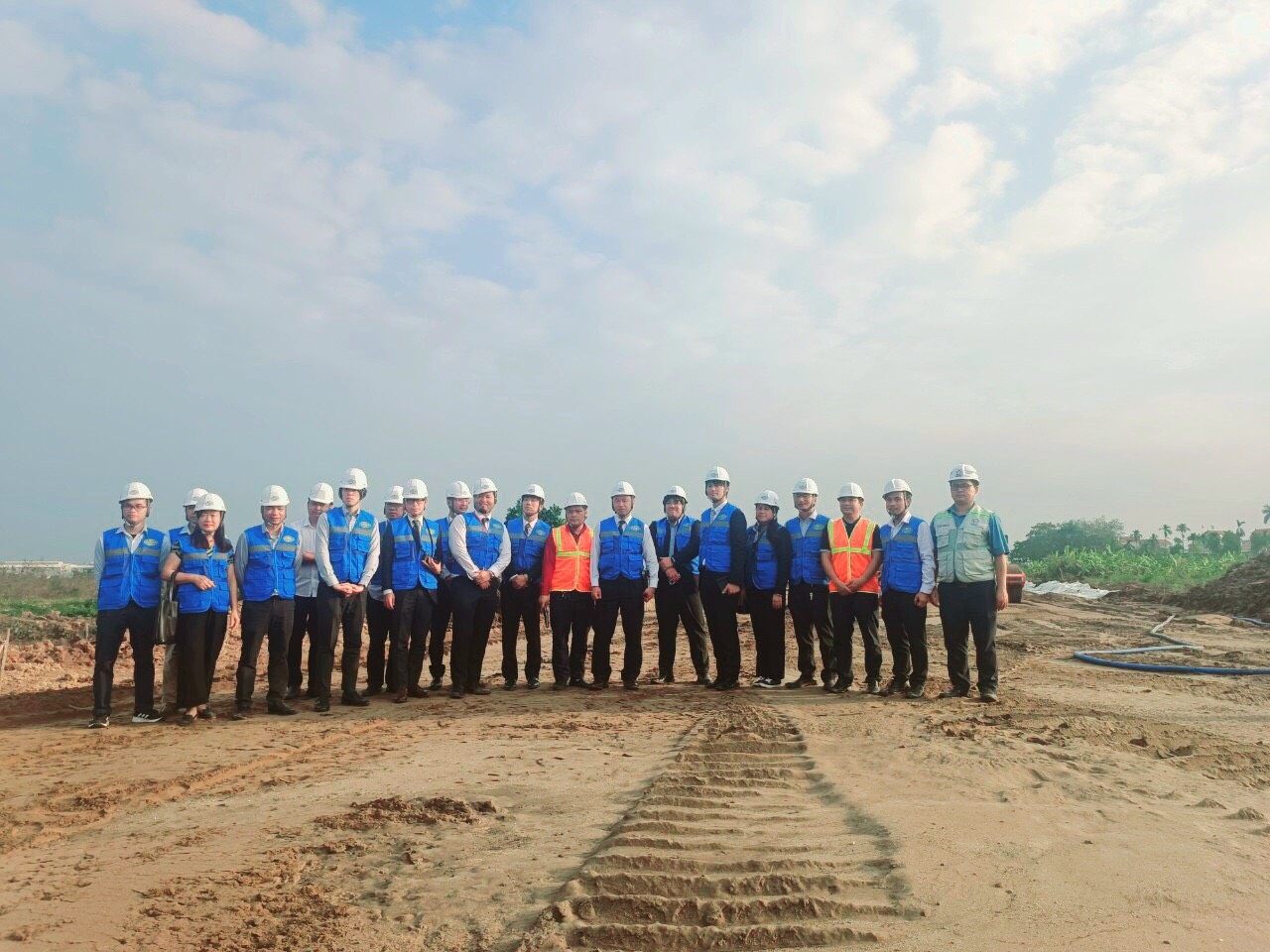
The delegation conducted a field visit to the construction site of the Ring Road 4 – Hanoi Capital Region project.
Media coverage of the symposium was provided by:
University of Transport Technology


