


Scientific Workshop on “Advanced Technologies in Bridge Design, Vibration Control, and Bridge Maintenance”
On May 19, 2026, the University of Transport Technology (UTT), in collaboration with Freyssinet Vietnam, organized a scientific workshop entitled "Advanced Technologies in Bridge Design, Vibration Control, and Bridge Maintenance". The event aimed to provide an academic forum for knowledge exchange, sharing practical experiences, and updating participants on advanced technological solutions in the field of bridge engineering.
Attending the workshop were Mr. Ta Quang Hung, Deputy Director General of the Department of Science, Technology, Environment and Construction Materials under the Ministry of Construction; representatives from the Vietnam Railway Authority, the Railway Project Management Unit of the Ministry of Construction, Thang Long Project Management Board, Hanoi Metropolitan Railway Management Board, the National Agency for Science and Technology Entrepreneurship and Commercialization Development (NACENTECH), along with experts and researchers from universities and research institutes specializing in bridge engineering and transportation infrastructure.
Representing partner organizations, Freyssinet International was represented by Ms. Marine Taton, Head of Cable-Stayed Systems; Mr. Nicolas Demey, Head of Prestressing Systems; and Mr. Tran Hoang Thang, Senior Structural Engineer. From Freyssinet Vietnam, attendees included Mr. Nguyen Trong Dong, Technical Director; Mr. Le Quang Hao, Business Development Director; Mr. To Quoc Hai, Commercial Director; and technical experts in bridge engineering.
Representing UTT were Dr. Tran Thanh An, Vice Rector; Assoc. Prof. Dr. Ngo Thi Thanh Huong, Head of the Office of Science, Technology and International Cooperation; Dr. Tran Ngoc Hung, Director of the Institute of Railway and Transportation Technology; together with leaders of various units and faculty members of the University.
.jpg)
The workshop attracted a large number of experts and researchers.
In his opening remarks, Dr. Tran Thanh An, Vice Rector of UTT, emphasized that as transportation infrastructure evolves toward greater modernization, intelligence, and sustainability, increasingly stringent requirements are being placed on the safety, durability, load-bearing capacity, and operational efficiency of high-speed railway bridges. In this context, topics such as bridge design according to international standards, vibration control, dynamic analysis, bridge repair, and structural strengthening are of particular importance.
He also highlighted that the University of Transport Technology has been entrusted by the Government and the Ministry of Education and Training to play a leading role in the Network of Centers of Excellence and Talent Development in Advanced and Smart Transportation Technology and Infrastructure. Accordingly, the University continues to promote collaboration among government agencies, academia, and industry to enhance applied research capacity, facilitate technology transfer, and develop high-quality human resources to support the national transportation infrastructure modernization strategy.
.jpg)
Dr. Tran Thanh An, Vice Rector of UTT, delivered the opening speech.
.jpg)
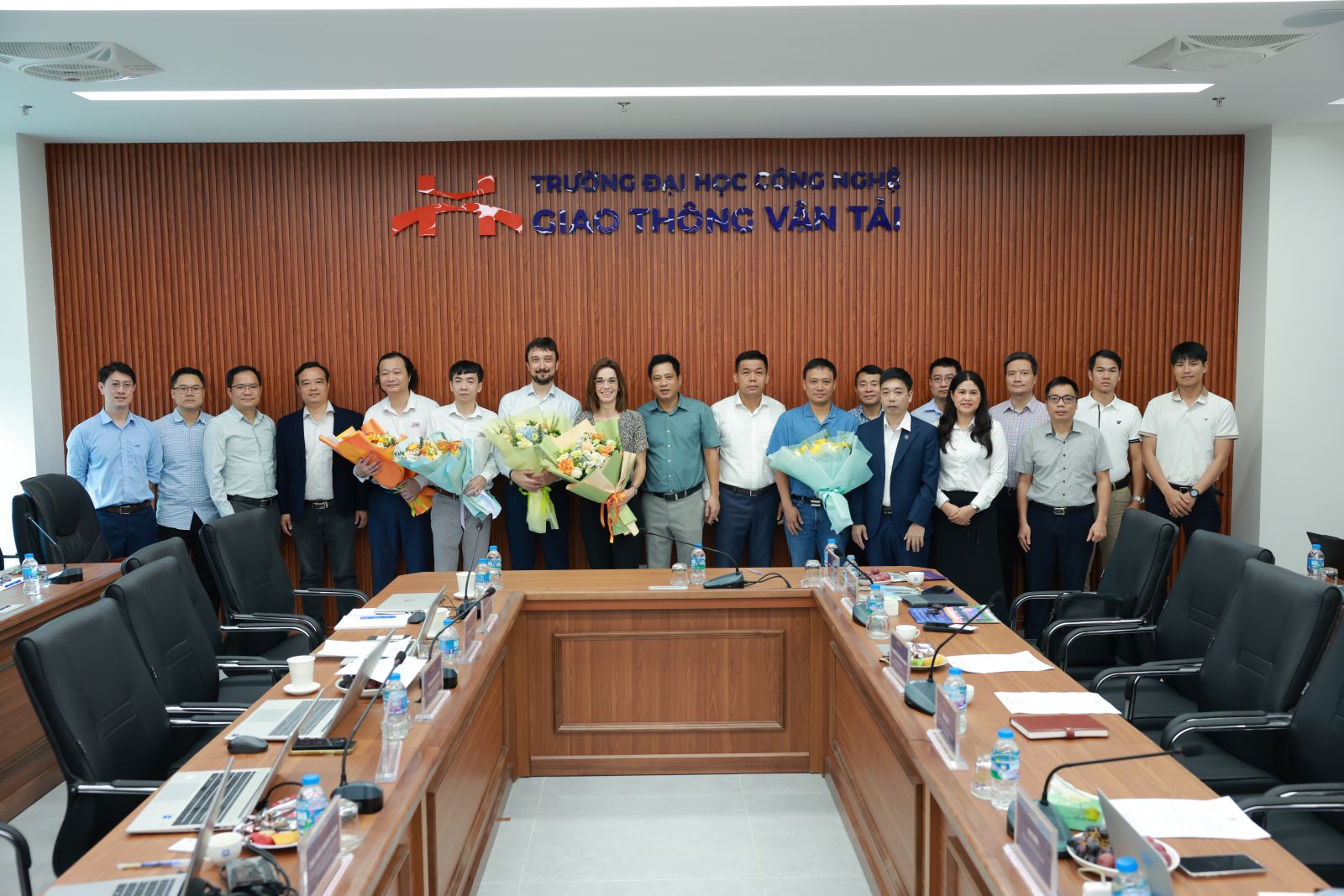
Leaders from the Department of Science, Technology, Environment and Construction Materials and the University presented flowers to the speakers.
During the workshop, presentations focused on emerging trends in the development of high-speed railway infrastructure worldwide, technical requirements for bridge structures under high-speed operational conditions, and safety and stability criteria in bridge operations.
.jpg)
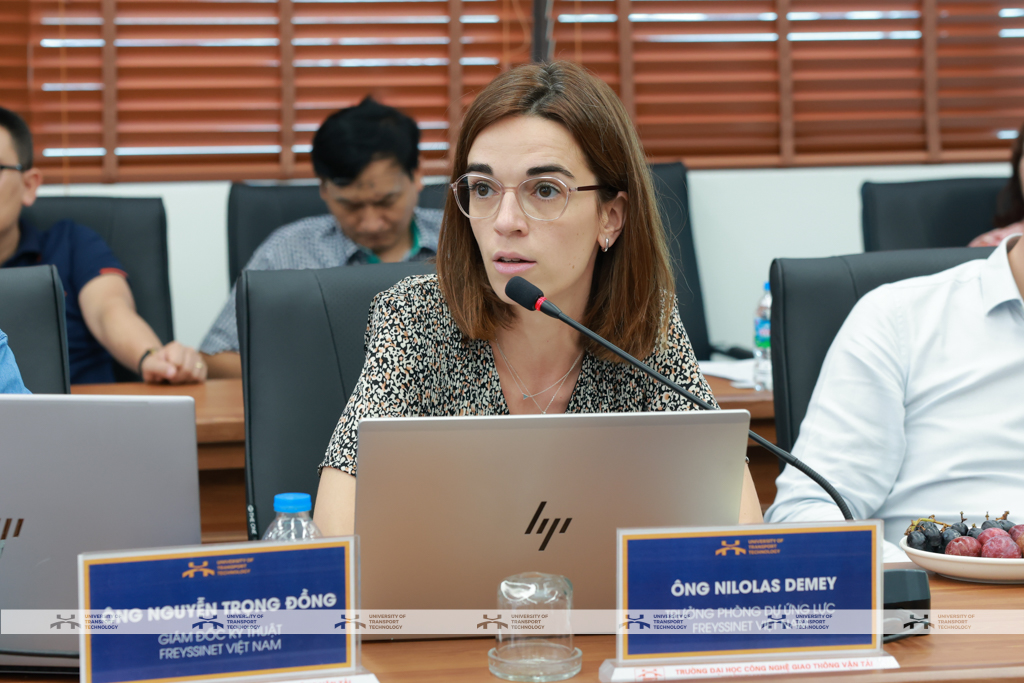
Several in-depth studies addressing resonance phenomena, the impact of high-speed trains on bridge structures, train–bridge–track interaction models, and evaluation standards based on Eurocodes were also presented through practical examples from various international projects.
.jpg)
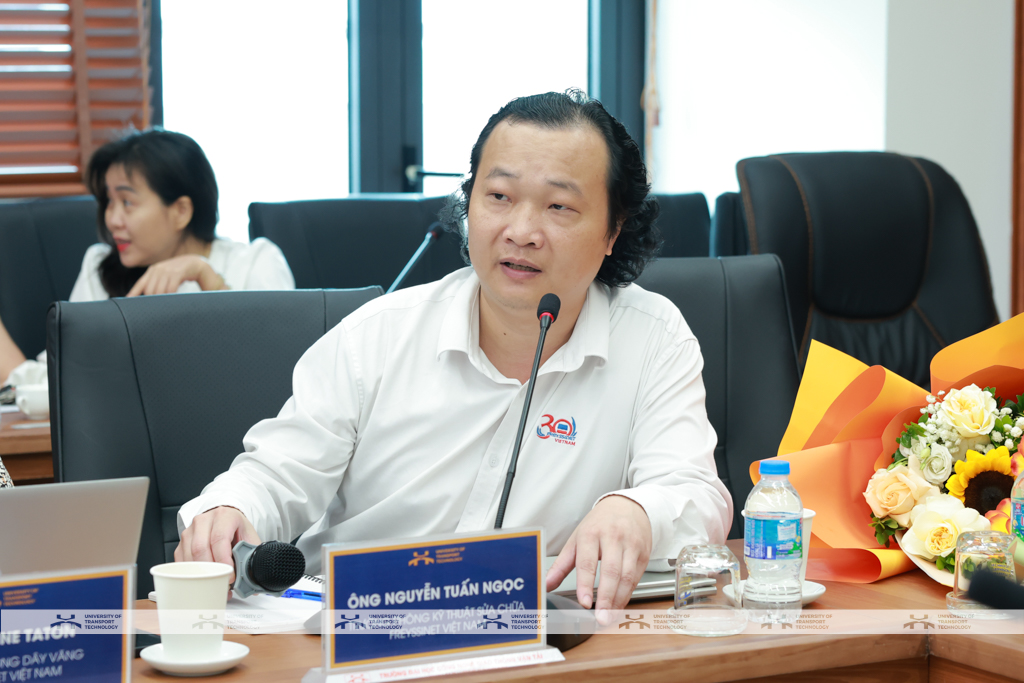
In addition, the workshop devoted considerable attention to technologies for bridge repair, strengthening, and upgrading. Advanced solutions discussed included carbon fiber materials, high-strength shotcrete, external prestressing systems, micropiles, flat jacks, as well as bridge lifting technologies and cable replacement techniques for cable-stayed bridges. These technologies contribute significantly to enhancing structural capacity, extending service life, and ensuring the safety of transportation infrastructure.
.jpg)
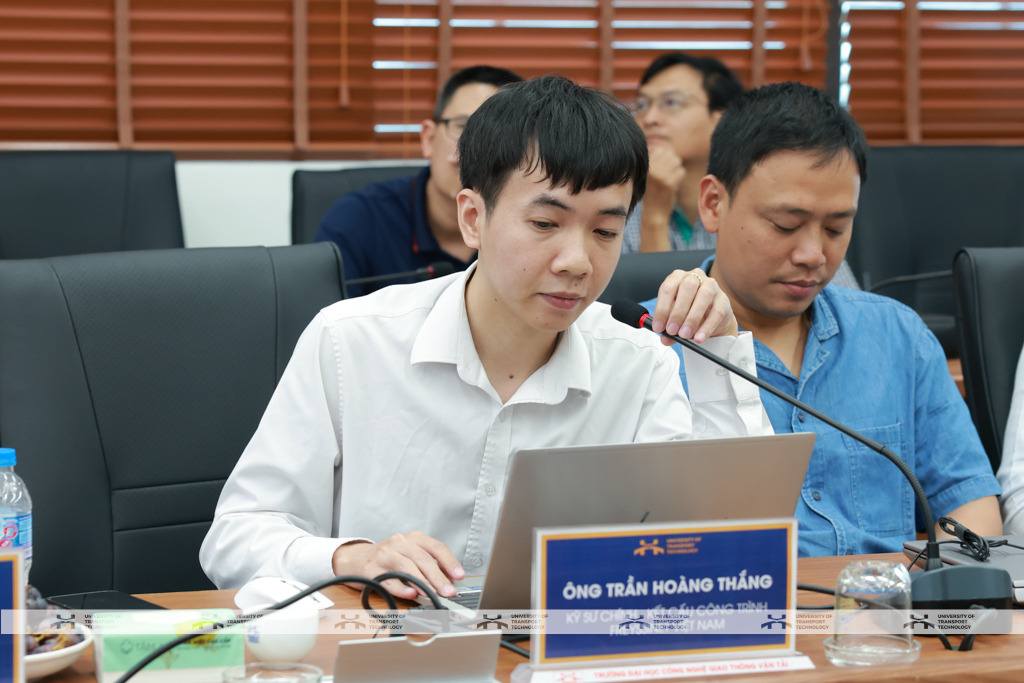
Guest speakers shared their expertise during the workshop.
Through presentations and professional discussions, the workshop served as a valuable platform connecting researchers, experts, industry representatives, and educational institutions in the fields of bridge engineering and high-speed railways. It also opened up new opportunities for collaboration in research, education, and technology transfer to support the development of modern transportation infrastructure in Vietnam.
University of Transport Technology


