


UTT Strengthens the “Triple Helix” Partnership in Developing Human Resources for Science, Technology, Innovation and Digital Transformation
On August 5, 2026, at the National Innovation Center (NIC) in Hanoi, representatives of the University of Transport Technology (UTT) attended a seminar on promoting Government–University–Industry cooperation in developing human resources for science, technology, innovation, and digital transformation. The event served as a forum connecting government agencies, educational institutions, and businesses, with the aim of fostering substantive cooperation models that align education with technological needs and labor market demands.
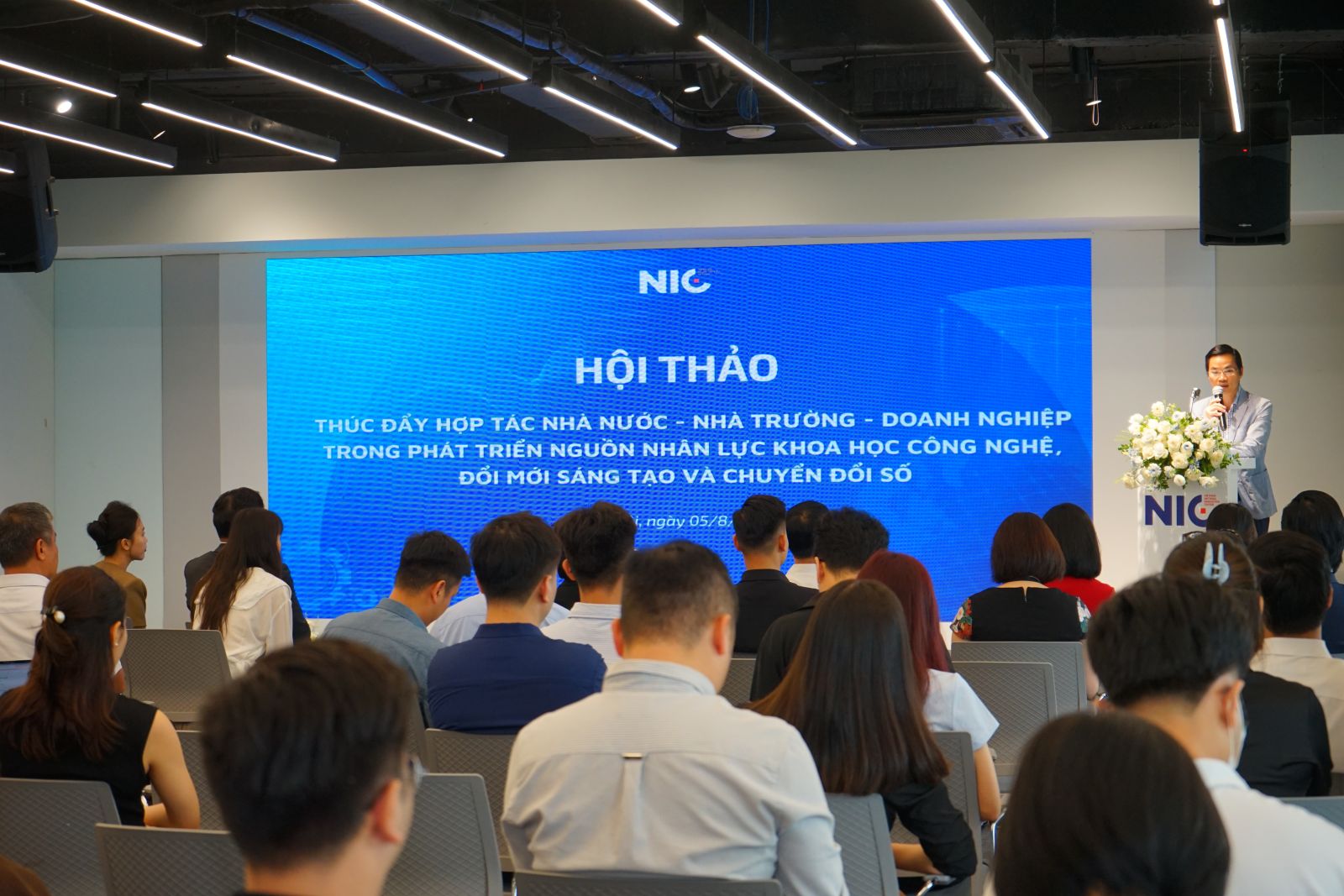
Overview of the seminar at the National Innovation Center (NIC), Hanoi
High-Quality Human Resources – A Foundation for Science, Technology and Digital Transformation
In his opening remarks, Mr. Do Tien Thinh, Deputy Director of the National Innovation Center (NIC) under the Ministry of Finance, emphasized that science, technology, innovation, and digital transformation are becoming key drivers of economic growth, labor productivity, and national competitiveness. However, the decisive factor in realizing the full potential of these drivers remains people, particularly a workforce equipped with professional knowledge, technological skills, innovation capabilities, and the ability to adapt rapidly to changes in the labor market.
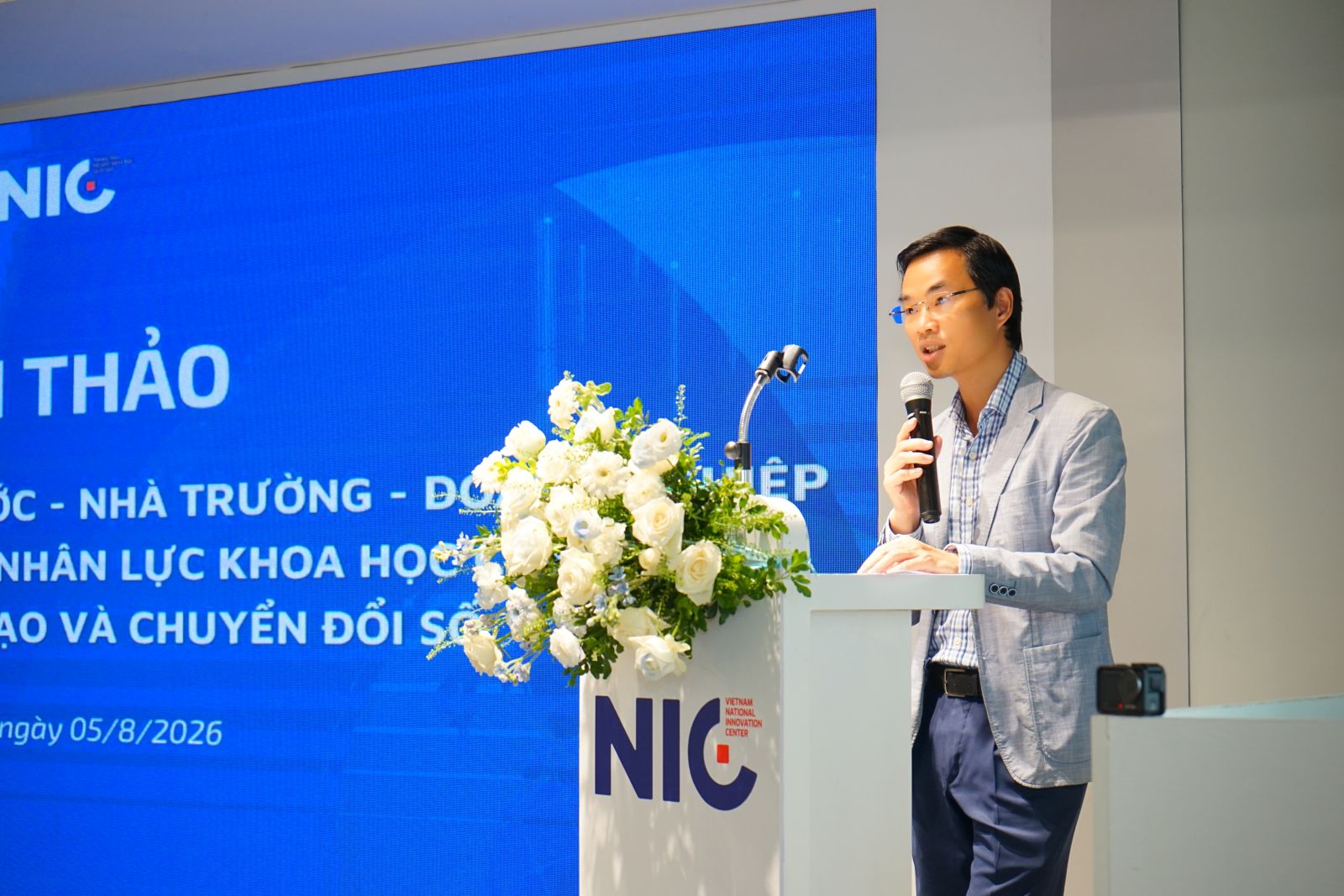
Mr. Do Tien Thinh, Deputy Director of NIC, speaks at the seminar.
According to the orientations shared at the seminar, the “Triple Helix” model clearly defines the role of each stakeholder: the Government creates the institutional framework and improves mechanisms, policies, and the environment for cooperation; universities undertake education, research, and human resource development; while businesses identify practical needs, transfer technology, provide opportunities for practical experience, and recruit trained human resources. Effective coordination among the three stakeholders is expected to narrow the gap between academic programs and the actual requirements of the labor market.
Samsung Innovation Campus 2026 – A Technology-Oriented Education Partnership Model
At the seminar, Mr. Kim Yong Sup, Deputy General Director of Samsung Vietnam, stated that no single organization or enterprise can effectively address the challenge of developing technology talent on its own. Government–University–Industry cooperation should therefore be regarded not merely as a coordination mechanism, but as a core component of the strategy for developing high-quality technology human resources.
A notable example introduced at the seminar was the Samsung Innovation Campus (SIC) 2026 program, jointly implemented by Samsung Vietnam, NIC, Letuin High Tech Vietnam Co., Ltd., and nearly 20 universities and colleges nationwide. The program aims to train approximately 2,200 students in 2026, focusing on Artificial Intelligence (AI), the Internet of Things (IoT), Big Data, and, for the first time, expanding semiconductor training across multiple levels.
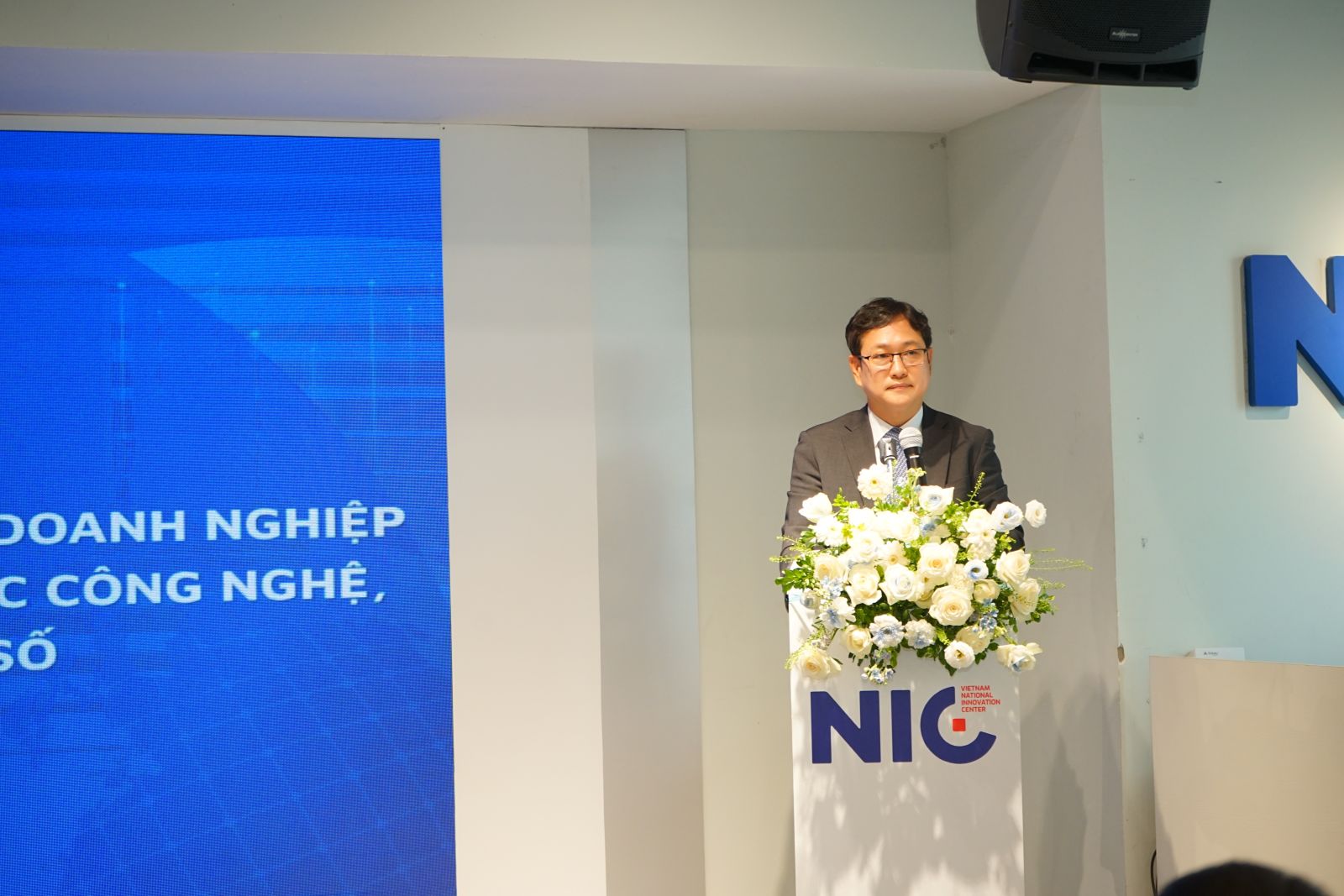
Mr. Kim Yong Sup, Deputy General Director of Samsung Vietnam, shares insights into the technology workforce development model.
In addition to specialized knowledge, the SIC model places strong emphasis on practical training and real-world application. Universities take the initiative in student recruitment and training delivery; Samsung provides curricula, equipment, and industry experts; while NIC supports networking, coordination, and the expansion of the model. This approach is significant in bringing technological knowledge closer to students and creating a direct bridge between university education and business needs.
Exploring Substantive Cooperation Mechanisms between Universities and Businesses
Discussions at the seminar also proposed strengthening public–private partnerships and co-creation mechanisms in higher education. Businesses can become more deeply involved in developing and updating academic programs, teaching, and practical training, while also investing in laboratories, training centers, equipment, technologies, experts, scholarships, and joint research programs.
From the perspective of educational institutions, participants proposed establishing co-funded research and innovation funds; developing regulatory sandbox mechanisms for new education models, university-based enterprises, and the commercialization of research outcomes; and establishing criteria for evaluating the effectiveness of cooperation based on the quality of human resources, the level of business participation, and the practical applicability of research outcomes.
Another noteworthy proposal was to develop education models aligned with the industrial characteristics of individual regions, thereby creating a highly specialized workforce capable of directly meeting the needs of growing manufacturing and technology sectors.
Aligned with UTT’s Orientation for High-Tech Human Resource Development
The issues discussed at the seminar closely align with the directions that the University of Transport Technology is pursuing in education, research, and industry cooperation. Previously, in March 2026, UTT held a working session with Letuin High-Tech Vietnam Co., Ltd., the representative responsible for implementing the Samsung Innovation Campus program in Vietnam, to discuss cooperation in developing high-quality human resources, particularly in semiconductors, AI, IoT, and Big Data.
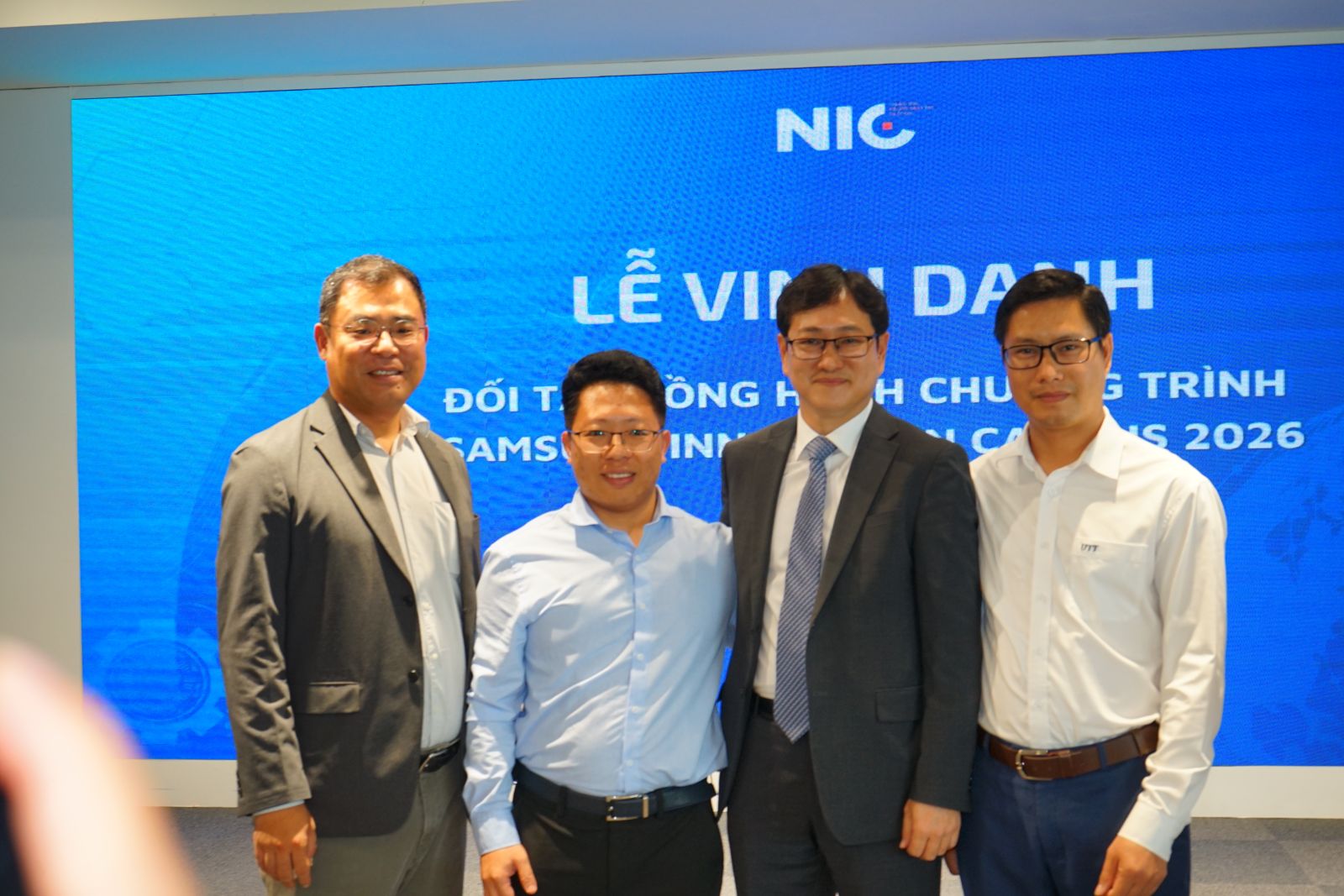
Representatives of the University of Transport Technology with Mr. Kim Yong Sup, Deputy General Director of Samsung Vietnam, and Mr. Kim Yong Tae, Director of Letuin High-Tech Vietnam Co., Ltd., at the Partner Recognition Ceremony of the Samsung Innovation Campus 2026 program
During the working session, the University emphasized the importance of strengthening education through practical training and real-world projects, enabling students to gain exposure to modern technologies, enhance their professional skills, and improve their readiness for the labor market. This also reflects the core principle of the “Triple Helix” model: businesses actively participate in education and innovation; educational institutions proactively innovate their curricula, teaching methods, and learning environments; and government agencies create favorable mechanisms for cooperation models to be implemented and expanded.
UTT’s participation in the seminar provided an opportunity to stay updated on new policy directions and cooperation models while further strengthening connections with NIC, Samsung, and the broader technology business community. This provides the University with additional foundations for developing academic programs, research and innovation activities, laboratories, industry internships, and technology transfer models aligned with the growing demand for high-quality human resources in the new development period.
University of Transport Technology


