


UTT Students Win First Prize at International Design Competition 2026 with Urban Logistics Project
Competing against numerous promising projects, a team of students from the University of Transport Technology (UTT) has officially won First Place in the “Urban Planning and Development” category at the International Design Competition 2026, organised by Moscow State University of Civil Engineering (MGSU), Russian Federation.
The International Design Competition 2026, exclusively open to student teams from MGSU's partner universities, took place from 1 September to 9 October 2026. The competition aimed to promote student research and design activities, enhance professional competencies, critical thinking and creativity, and provide opportunities for academic exchange among students from different countries.
This year's competition featured five categories: Urban Planning and Development; Hydraulics and Hydraulic Engineering; Construction Materials; Advanced Mathematics; and Building Engineering Systems. The competition was open to third- and fourth-year undergraduate students, with Russian and English as the working languages. It consisted of two online stages: Stage 1 involved application submissions and project descriptions, while Stage 2 focused on project presentations and defence.
The participating research team comprised five students: Le Tuan Khang, Luu Duc Hieu and Le Nam Phong (Logistics and Transport Infrastructure class 74DCLH21), together with Vu Thi Ha Phuong and Nguyen Thai An (Logistics and Transport Infrastructure class 75DCLH21). Under the academic supervision of Dr. Truong Thi My Thanh, Head of the Department of Urban Planning and Transport, the team developed and presented an innovative project entitled “System Design of a Physical Internet-Based Shared Freight Hub (PI-HUB) for Hanoi's Old Quarter”. The project integrates logistics infrastructure planning with technology to address the challenges of limited freight transport and storage space in the distinctive urban environment of Hanoi's Old Quarter.
.jpg)
The UTT student team participating in the competition with the support of their academic supervisor
A key strength that helped the project impress the international judging panel was its empirical research methodology and rigorous data collection process. From 8 to 10 September 2026, the students conducted three consecutive days of field surveys, divided into four working shifts covering the morning, afternoon, evening and night in the Hoan Kiem area.
The students visited delivery and receiving points at convenience store chains such as Circle K, Winmart and GS25 to observe the operations of trucks delivering consumer goods and frozen food. The team employed three data collection methods simultaneously: detailed store questionnaires, direct interviews with truck drivers, and independent observation and measurement of goods loading and unloading times.
.jpg)
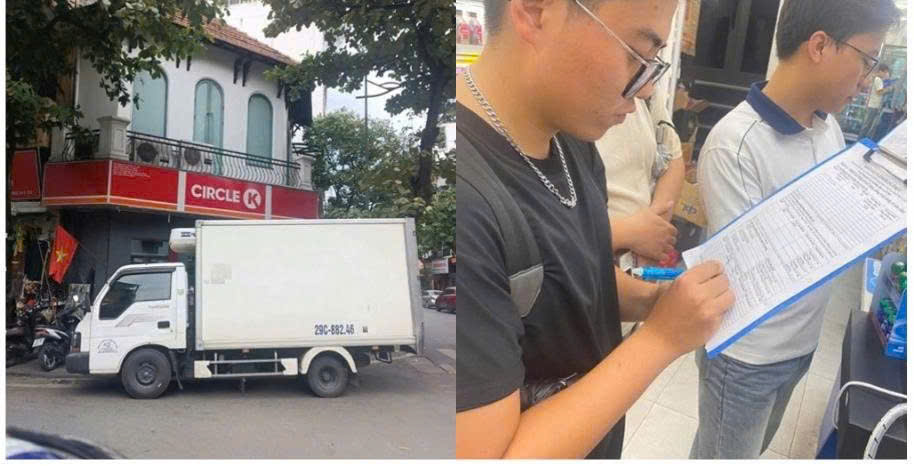
The student team conducting three consecutive days of field surveys in Hanoi's Old Quarter
Drawing on this extensive collection of real-world data, the team prepared a detailed project report and participated in the online Final Defence in English before MGSU experts, including Nina Danilina and Liuba Mitina. The team's PI-HUB system design effectively addressed the challenge of optimising storage space and freight distribution routes within a densely built-up urban environment while preserving the heritage of Hanoi's Old Quarter, fully meeting the requirements of the Urban Planning and Development category.
.jpg)
.jpg)
The UTT student team participating in the online project defence in English before MGSU experts
The team's outstanding efforts were recognised with First Place Winner Certificates, personally approved and signed by Mr. Alexander Deev, Director of the Centre for International Educational Integration at MGSU, and awarded to each member: Le Tuan Khang, Le Nam Phong, Luu Duc Hieu, Vu Thi Ha Phuong and Nguyen Thai An.
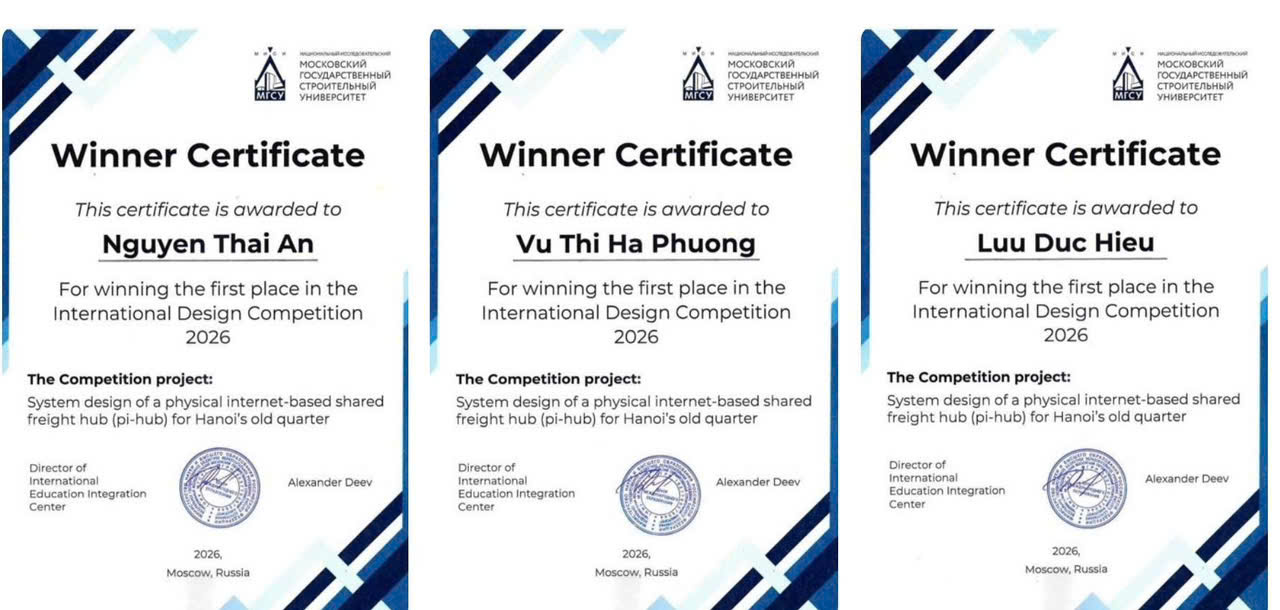
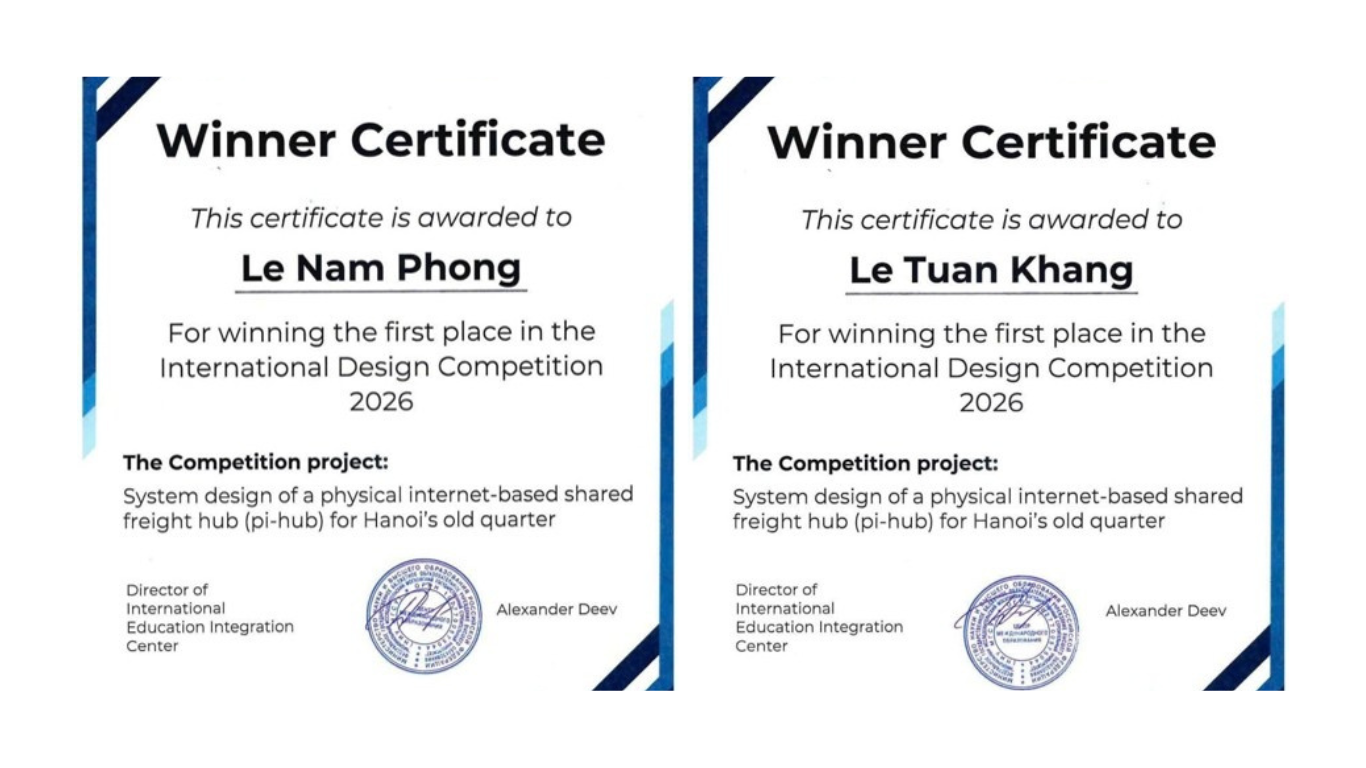
First Place Winner Certificates signed and awarded to each team member
Overcoming language barriers and meeting the rigorous standards of an international judging panel, the victory at MGSU 2026 demonstrates the ability of UTT students to succeed in an international academic environment. The achievement reflects their teamwork and foreign language proficiency, as well as the strong academic and technical foundations of their research projects. In particular, the project's success also highlights the University's commitment to innovative teaching methods that emphasise practical application and integrate real-world urban challenges into the core of teaching and research activities.
Faculty of Civil Engineering


