


University of Transport Technology and Its Mission to Train the Nation’s Railway Workforce in the New Era
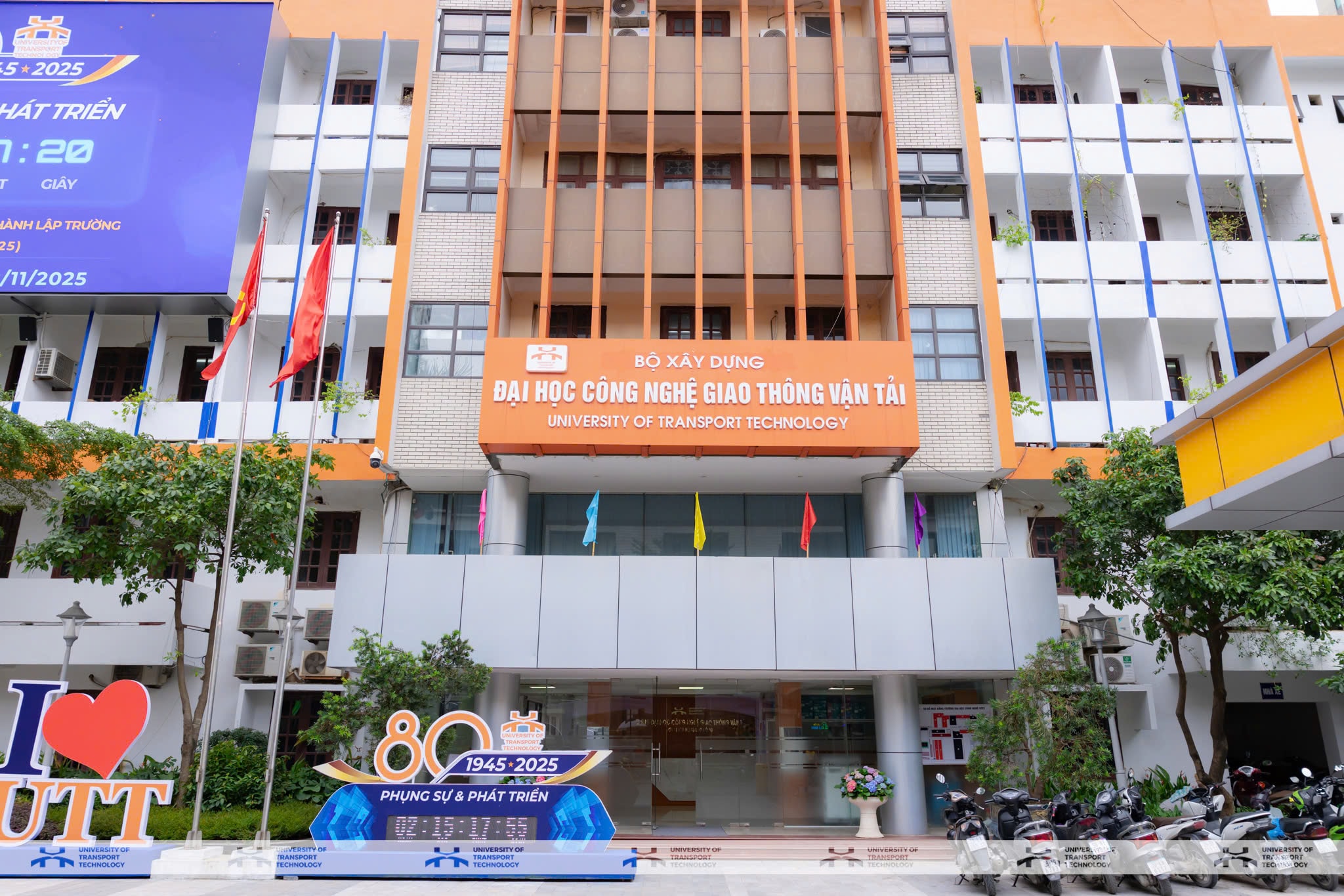
The University of Transport Technology (UTT), with 80 years of tradition in training technical personnel for the transport sector, has been entrusted by the Ministry of Construction with a pivotal role in developing human resources for national railway projects. At the same time, the University has been designated by the Ministry of Education and Training to lead the Network of Centers of Excellence for Talent Development in Transport Technology and Advanced, Smart Infrastructure.
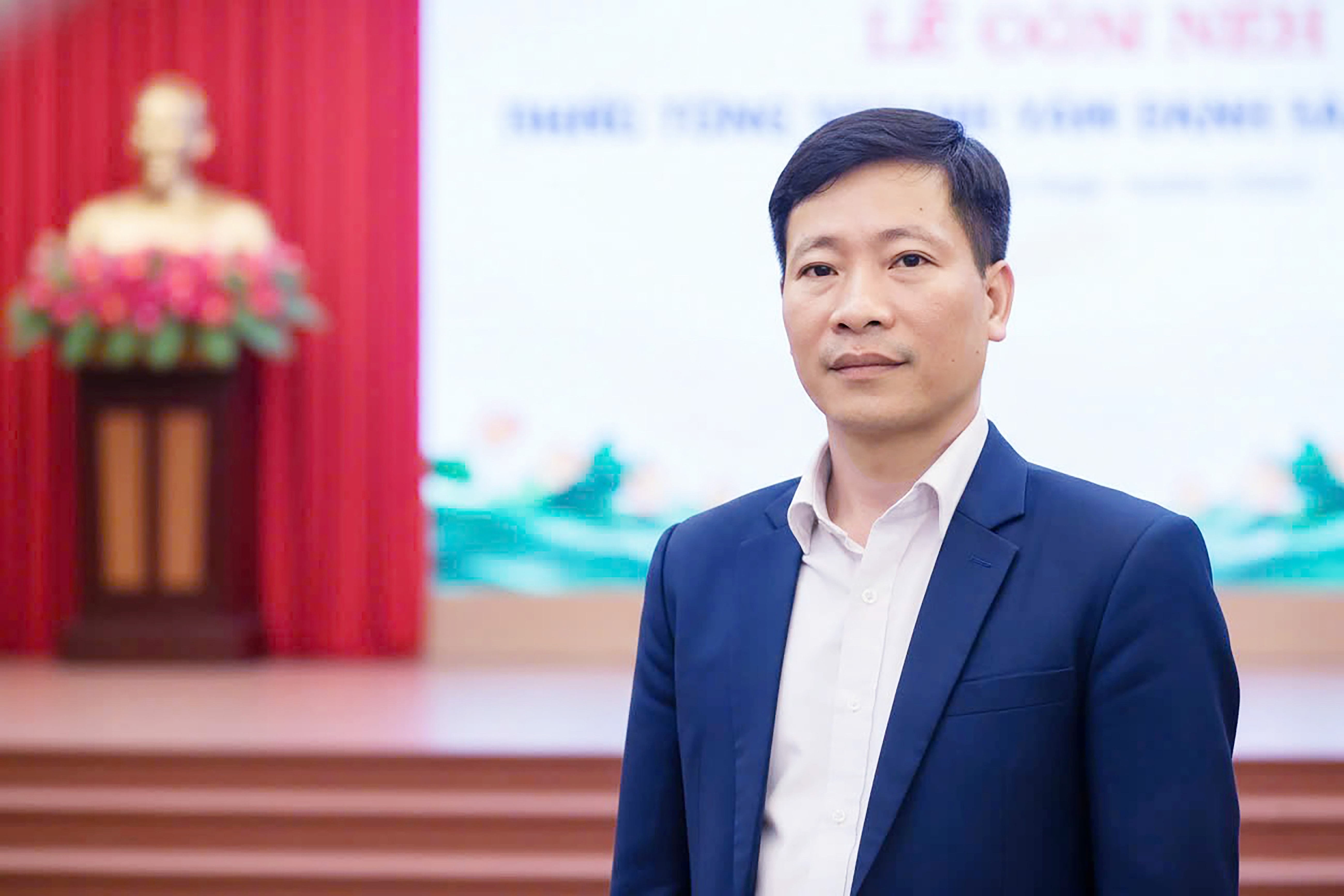
At the beginning of the Bính Ngọ Spring, a reporter from The National Assembly Deputies Newspaper spoke with Assoc. Prof. Dr. Nguyễn Hoàng Long, Rector of the University of Transport Technology, to gain deeper insights into the University’s mission of training the national railway workforce in the new era.
The Core Mission: Developing a Comprehensive Railway Human Resource Ecosystem
– Recently, the Party and Government have issued major policies related to the railway sector, including the Project on Railway Human Resource Development to 2035 with a vision to 2045. How do you view this context?
- We are witnessing a historically significant moment for the transport sector, especially for railways. Since the construction of the Reunification Railway, never before has rail transport been positioned as a strategic priority as it is today.
Conclusion No. 49 of the Politburo on the development orientation of Vietnam’s railway transport to 2030 with a vision to 2045; Resolution No. 57-NQ/TW affirming science and technology, innovation, and digital transformation as national development pillars; and Resolution No. 71-NQ/TW emphasizing the role of high-quality human resources—all provide a strong foundation for breakthrough development in transport and other sectors. Most notably, Decision No. 2230/QĐ-TTg approving the Project on Training and Developing Vietnam’s Railway Human Resources sets out clear targets: approximately 35,000 personnel to be trained during 2025–2030, and 70,000 during 2030–2035, to serve high-speed rail, electrified railways, urban railways, and other strategic railway lines.
These decisions reflect Vietnam’s aspiration to advance, affirming railways as an indispensable component of a modern, green, and smart infrastructure system. To realize this vision, we must begin with human resources—professionals capable of mastering advanced international technologies.
In this regard, UTT’s role has never been more prominent. With 80 years of experience training hundreds of thousands of technical professionals, UTT has been entrusted by the Ministry of Construction with the responsibility of leading national railway workforce development in this new phase.
– As a leading institution, how is UTT preparing to meet the human resource demands of major projects such as high-speed rail?
- To fulfill this responsibility, the University has been assigned 15 tasks by the Ministry of Construction, including six key priorities, primarily focusing on railway infrastructure construction, operations management, and maintenance under Decision No. 2321/QĐ-BXD implementing Decision No. 2230/QĐ-TTg. The Ministry is also undertaking procedures to invest nearly VND 1,000 billion in facilities and equipment for railway training and research, including a 15-storey academic building, a 9-storey international expert building, and national key laboratories in railway infrastructure, smart transport, and railway operations management.
High-speed rail is a highly complex project requiring highly qualified personnel and strict safety standards. Therefore, we are fully aware of our responsibility and are preparing comprehensively in terms of human and material resources. Our core mission is to develop a comprehensive railway human resource ecosystem, encompassing not only infrastructure engineers but also specialists in operations, traffic organization, rolling stock, and maintenance.
Importing Curricula, Promoting Exchanges, and Building an Elite Faculty
– How will UTT develop its faculty and experts to meet training demands?
- National-scale railway workforce development can only succeed if we build a strong, internationally qualified faculty. By 2030, UTT aims to increase its faculty to approximately 800 lecturers, with about 60% holding doctoral degrees and 15–20% holding the titles of Professor or Associate Professor, while attracting 10–15 international experts annually.
From 2026, the University will implement the “Railway Human Resource Development Project,” under which 40% of railway faculty members will undertake training or research internships at leading institutions in China, South Korea, Japan, Germany, and France. We also aim to establish five internationally recognized research groups by 2030, including specialized railway research teams to lead the Center of Excellence for Talent Development. Investment in faculty is a strategic investment; only with elite faculty can we train elite engineers.
– What role does scientific research play in the University’s strategy?
- If training is the “foundation,” research is the “driving force.” In recent years, UTT faculty have successfully implemented one national-level project and eight ministerial-level projects related to railways, and developed over 100 technical standards for high-speed and electrified railways under assignments from the Ministry of Construction.
In terms of scientific publications, UTT faculty have produced over 700 ISI/Scopus-indexed papers in the past three years. The University’s Journal of Science and Transport Technology (JSTT) has been indexed in Scopus—an achievement attained by very few Vietnamese universities. This clearly demonstrates our research capability and technological mastery.
– What role does international cooperation play?
- In the railway sector, international cooperation is not optional—it is essential. UTT is expanding partnerships with KOICA (South Korea), AFD (France), and universities in Japan, Germany, France, and China—countries with leading high-speed rail systems.
We are “importing” curricula and textbooks, promoting student and faculty exchanges, inviting international experts, and implementing joint programs such as 2+2 and 3+1 models. Our goal is for UTT students to meet international engineering standards during their studies.
A State-Commissioned Training Mechanism for Specialized Disciplines Is Essential
– As a major training institution under the Ministry of Construction, what recommendations does UTT have for the Government and the Ministry?
– In its role as the focal institution of the Network of Centers of Excellence for Talent Development and as a key training provider in the core railway sector, UTT proposes three principal groups of recommendations:
First, a State-commissioned training mechanism for specialized railway disciplines, similar to the current mechanism applied to teacher education. This is a crucial solution to stabilize enrollment sources and proactively develop strategic human resources.
Second, continued investment in national key laboratories in the railway field, such as a High-Speed Rail Simulation Center, a Railway Materials Laboratory, a Rail and Turnout Testing Center, and a Train Dynamics Laboratory. Without investment in key laboratories, we will remain dependent on foreign technologies.
Third, preferential policies for the advanced training and overseas education of faculty members, as well as mechanisms to attract international experts under special arrangements.
In addition, we propose the establishment of a National Railway Human Resource Scholarship Fund to support students in strategic fields.
– What message would you like to convey to students preparing to apply for university admission in 2026?
– I would like to tell you that when you choose railway engineering today, you are not merely choosing a profession; you are choosing to help build the future of the nation. Over the next 10 to 20 years, Viet Nam will put into operation high-speed railway lines, modern metro systems, and specialized railways serving logistics. These projects will stand for decades.
The engineers trained today will be the ones directly operating and developing the railway systems of the future. UTT is committed to accompanying students through scholarship policies, tuition support, internship opportunities with enterprises, and international exchange programs.
By 2030, the University aims to reach a scale of 30,000 learners, with railway and smart infrastructure disciplines serving as spearhead fields. We warmly welcome you to UTT — where generations of engineers are being trained to lead Viet Nam into the era of smart infrastructure.
– Thank you very much.
Source: The National Assembly Deputies Newspaper


