


UTT collaborates with Hyundai Motor Company, South Korea, on automotive workforce training
On October 25, the University of Transport Technology collaborated with Hyundai Motor Company from South Korea to organize a workshop aimed at enhancing the effectiveness of training in the automotive industry. This event focused on promoting the development and improving the quality of automotive education through strengthened collaboration with leading global automotive manufacturers.
The automotive engineering field is currently one of the most significantly impacted by the Fourth Industrial Revolution. Enhancing the quality of human resources to support the industry's growth is a priority for both businesses and educational institutions.
Attending the program from Hyundai Motor Company were industry experts and representatives from various departments, including leadership and production management.
From the university, notable attendees included Dr. Nguyễn Mạnh Hùng (Vice Rector), Dr. Ngô Thị Thanh Hương (Head of the Department of Science and International Cooperation), Dr. Nguyễn Quang Anh (Head of the Mechanical Engineering Department), Dr. Đỗ Ngọc Tiến (Director of the Mechanical Technology Center), along with specialists, scholars in automotive engineering, and interested students.
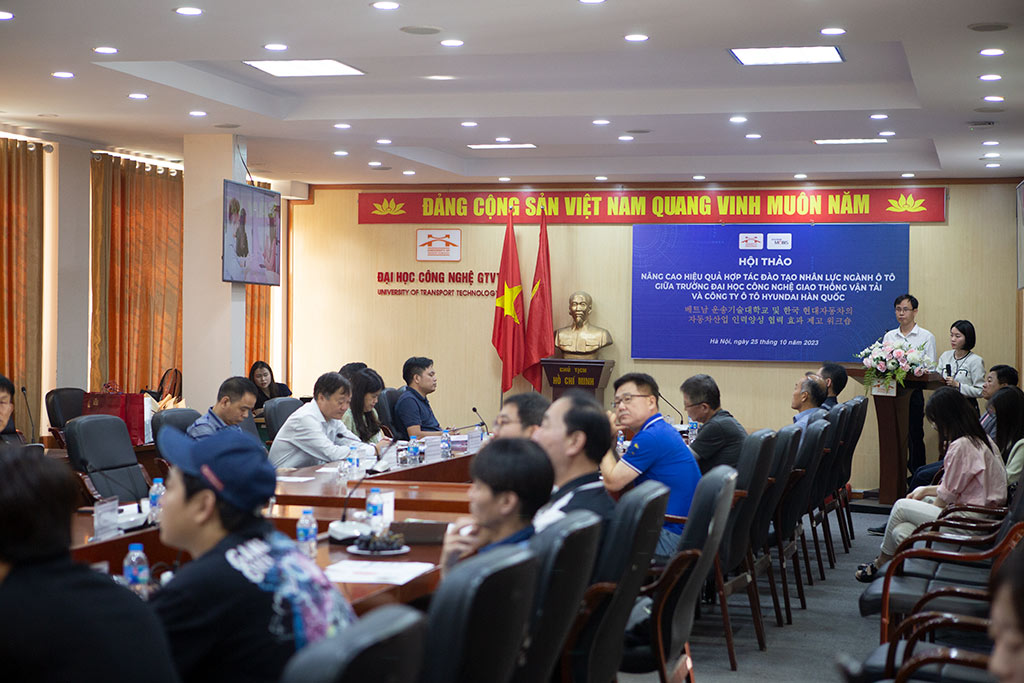
Overview of the Workshop on Enhancing Cooperation in Automotive Workforce Training.
At the workshop, Dr. Nguyen Manh Hung, the school's Vice Rector, stated that the training goal of the University of Transport Technology (UTT) is focused on application, practical learning, and real-world experience. Therefore, UTT has strengthened cooperation with many reputable businesses and organizations both domestically and internationally. The university has been flexible in changing its programs and training objectives to align with practical circumstances and meet the demand for high-quality human resources. Notably, the automotive mechanical engineering program at the university has taken the lead in the strategy for developing human resources and has achieved some commendable results.
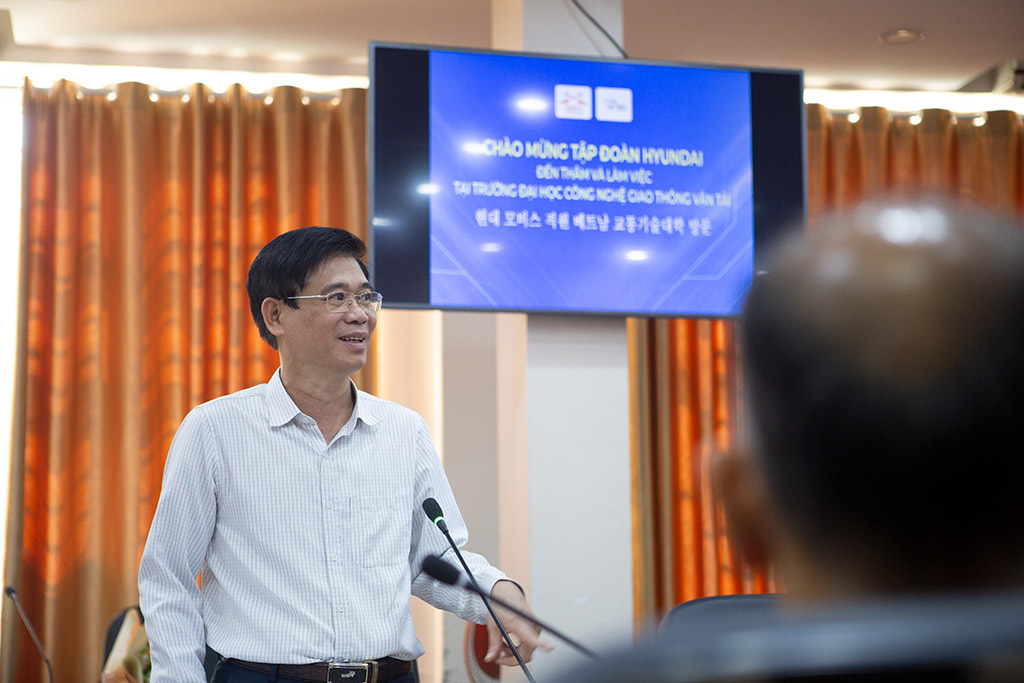
Dr. Nguyen Manh Hung, the Vice Rector of the university, speaks at the workshop.
In its training strategy, the university emphasizes two types of training: short-term and long-term, aiming to deepen research; training efforts extend beyond the confines of a single institution or discipline, embracing diversity and global perspectives. The engineers in automotive technology trained by the university are equipped with high skills, good thinking, proactive and creative attitudes, dedication to their profession, and a high level of discipline in their work. This is also a crucial task set by the university to build a high-quality workforce connected to smart technology, contributing to the economic and social development of the country.
At the workshop, Dr. Tạ Tuấn Hưng, a lecturer from the Faculty of Mechanical Engineering at the University of Transport Technology, provided an overview of the training specialties, including Mechanical Engineering Technology, Mechatronics Engineering Technology, Automotive Technology, and Intelligent Transportation; training orientations; the content and duration of training programs; practical training components for students; the involvement of businesses in internship activities and thesis evaluations; as well as the job prospects and capabilities of graduates.
The automotive training programs at the University of Transport Technology are designed and implemented by a highly qualified team of instructors, including 5 Associate Professors, 17 PhDs, and 34 Masters. With the goal of training engineers with both knowledge and practical skills, the curriculum is logically structured, with a significant proportion of practical and experimental training. This approach provides students with ample opportunities to practice and intern on modern vehicles. Practical training is not limited to the period before thesis defense but is integrated throughout various courses, from foundational to specialized subjects.
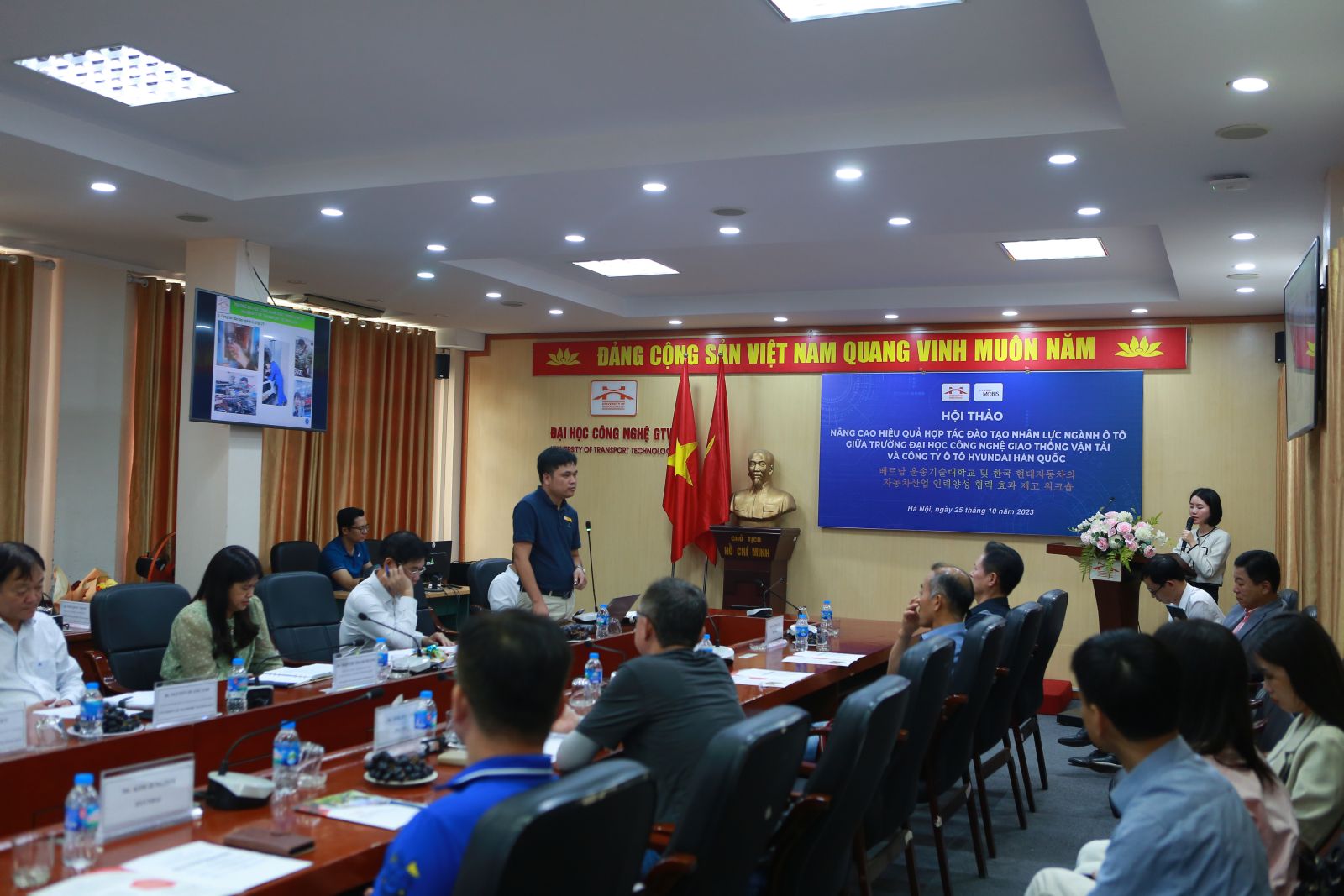
Dr. Tạ Tuấn Hưng, a lecturer from the Faculty of Mechanical Engineering at the University of Transport Technology, shared insights at the workshop.
In addition to conducting theoretical training in the classroom, the program integrates practical activities and internships at the factories and dealerships of major automobile brands such as Hyundai, Toyota, and Honda. During the thesis project phase, students receive guidance and evaluation from esteemed experts in the automotive field from renowned universities such as Hanoi University of Science and Technology, University of Transport and Communications, and Military Technical Academy. The thesis defense committees also include leaders and specialists from various factories and dealerships, resulting in many students being offered official job contracts during their graduation presentations.
Under the chairmanship of Dr. Nguyễn Quang Anh, Head of the Faculty of Mechanical Engineering, the discussion was lively and attracted the interest of the attendees, focusing primarily on strategies for developing the automotive industry in Vietnam today in line with sustainable development trends.
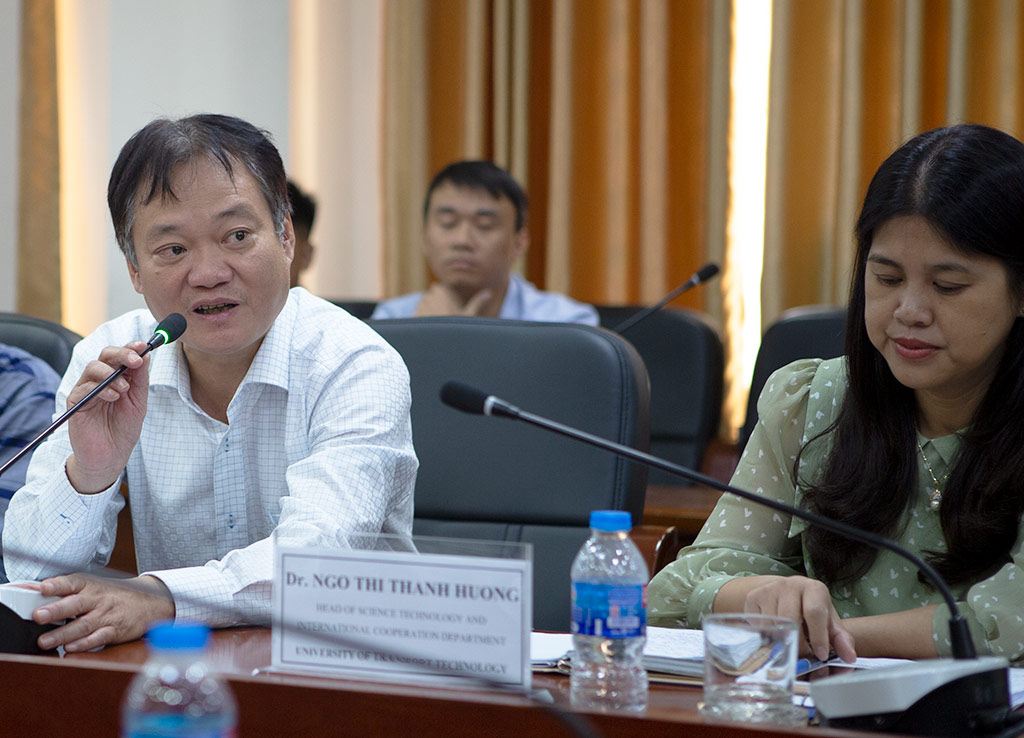
Dr. Nguyễn Quang Anh, Head of the Faculty of Mechanical Engineering, presided over the discussion.
The development strategy for Vietnam’s automotive industry up to 2025, with a vision to 2035, was approved under Decision No. 1168/QĐ-TTg dated July 16, 2014, by the Prime Minister. The overarching goal of the strategy is to establish Vietnam’s automotive industry as a key sector that meets domestic market demand for competitively advantageous vehicles, participates in exports, drives the growth of related industries, and enhances competitiveness to become a supplier of components and parts in the global automotive manufacturing supply chain.
The strategy outlines several key directions, including identifying and establishing strategic partnerships and encouraging investment in large-scale projects to foster the supporting industries. It promotes the production of environmentally friendly vehicles, such as fuel-efficient cars, hybrid vehicles, biofuel-powered cars, and electric vehicles, ensuring compliance with emission standards as approved by the Prime Minister’s roadmap.
Additionally, the strategy emphasizes investing in technology upgrades to improve product quality and meet international standards. It also aims to establish centralized automotive industrial clusters through production reorganization. Strengthening cooperation between automobile manufacturers, assemblers, supporting industry enterprises, R&D institutions, and training centers across different economic sectors is another critical focus to enhance investment efficiency and specialization.
Furthermore, the strategy seeks to refine the legal framework, develop transportation infrastructure to ensure road safety, and improve service quality to meet market demands.
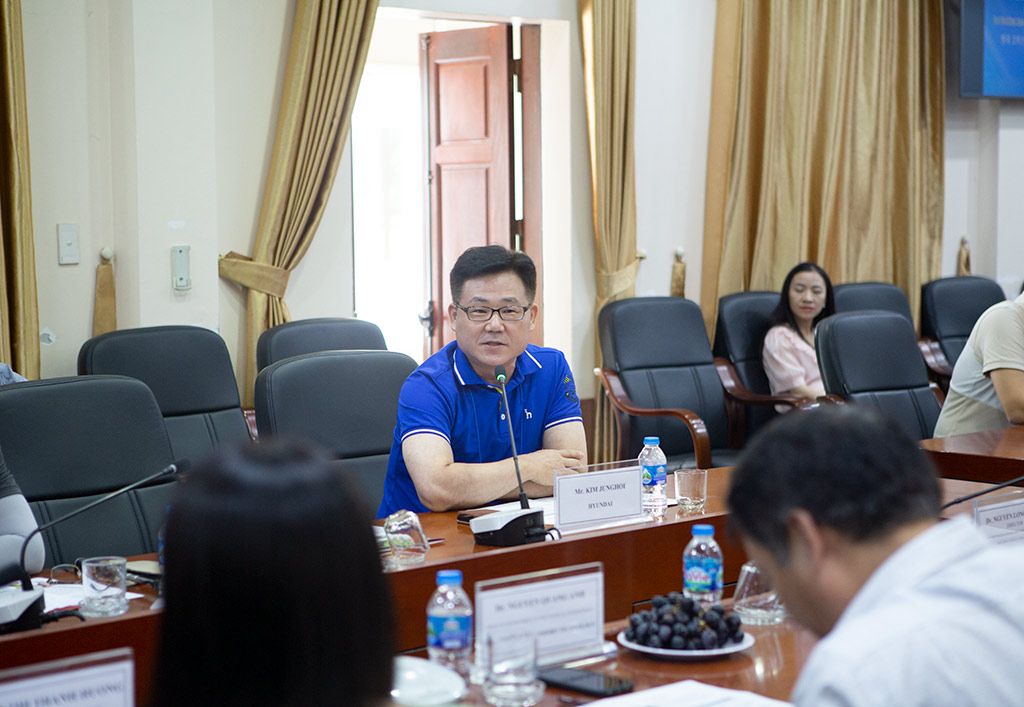
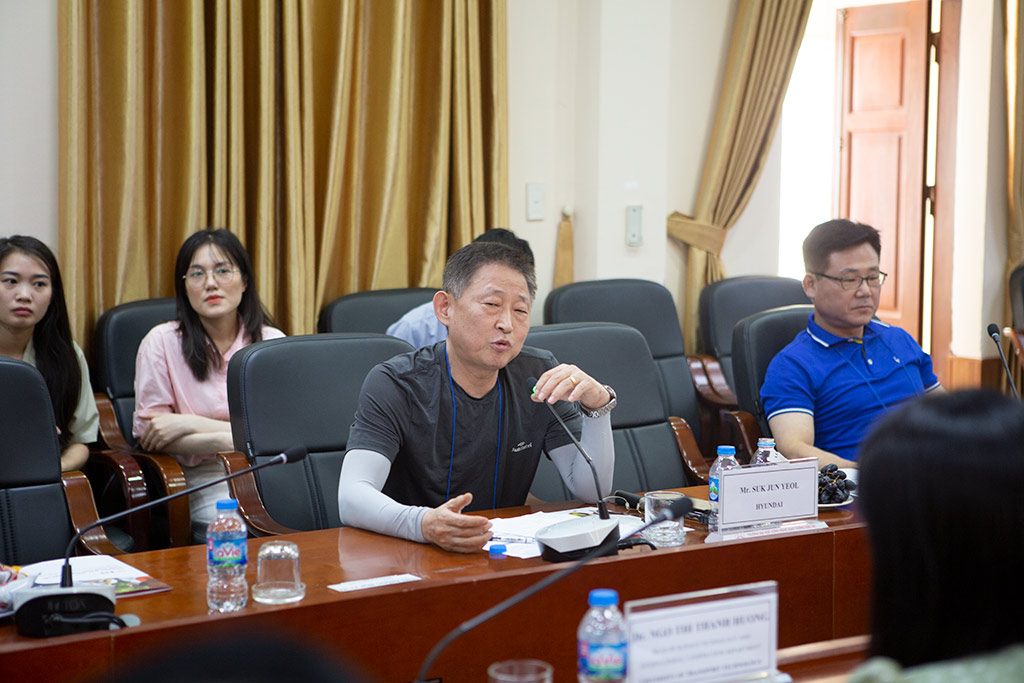
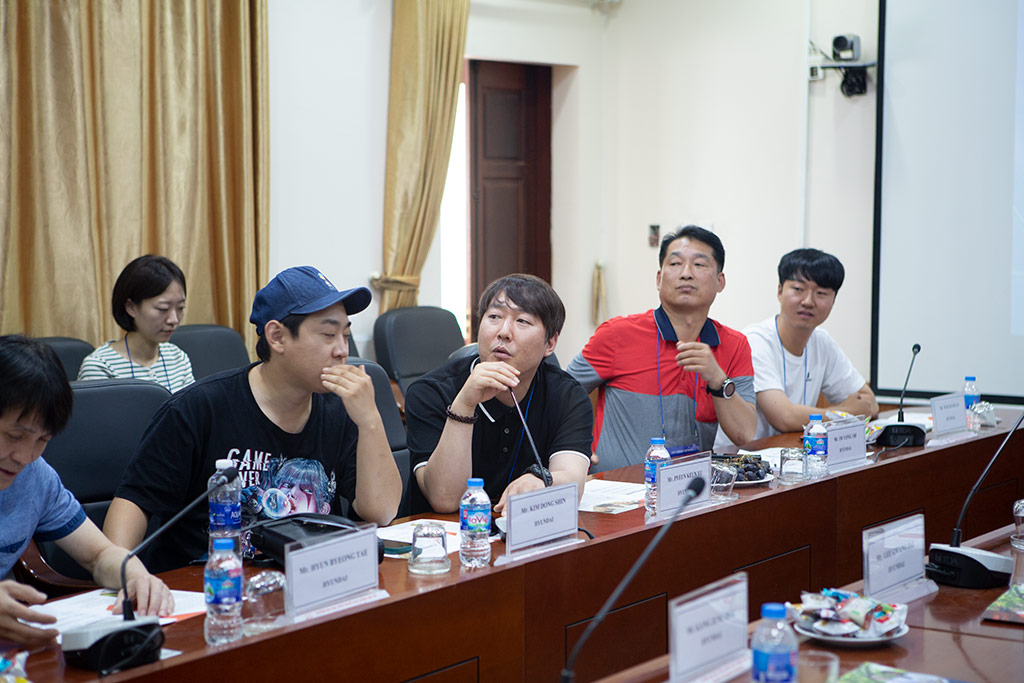
Experts from Hyundai Motor Company, South Korea, participated in the seminar discussion.
At the seminar, students shared their aspirations and job preferences after graduation. Most of them expressed a desire to become automotive design engineers, maintenance and repair engineers, assembly and production specialists, or parts manufacturing experts for major automotive companies such as Hyundai and Toyota. Their goal is to gain hands-on experience and learn from the advanced manufacturing technologies of leading global automotive industries.
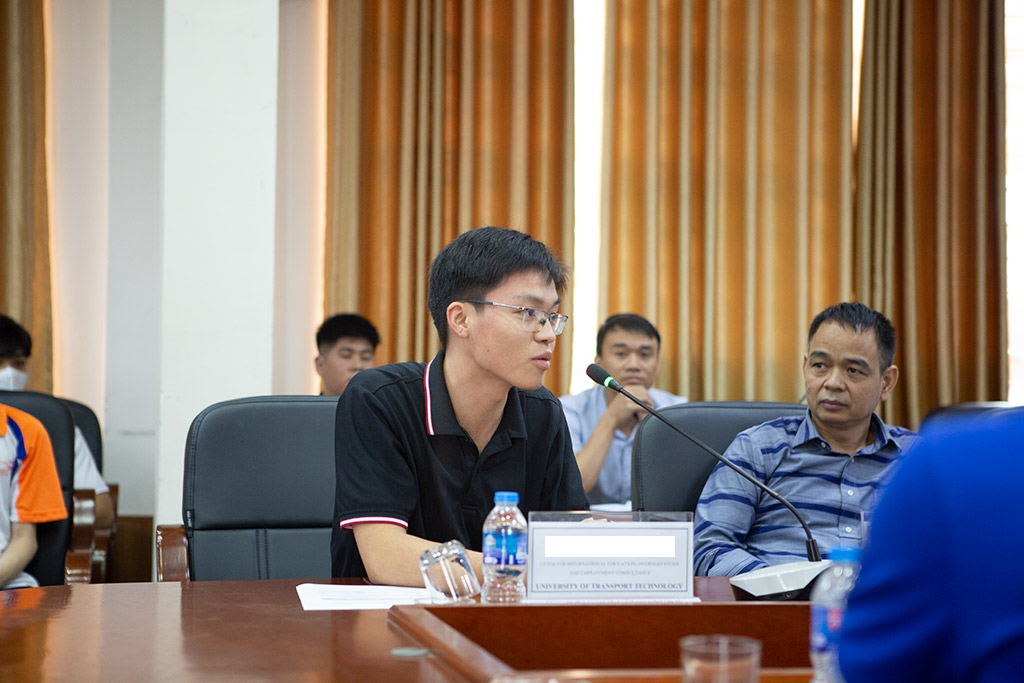

The students shared their thoughts at the seminar.
It is hoped that today’s program will open up new opportunities for collaboration between the University of Transport Technology and Hyundai Motor Company, South Korea. This partnership will create favorable conditions for students to intern and work directly at Hyundai's manufacturing plants in South Korea, one of the world's leading countries in the automotive industry.
.jpg)
The organizing committee took a commemorative photo with the delegates and students attending the seminar.
University of Transport Technology


