


UTT Implements the Science and Technology Program for 2026–2030: Focusing on 06 Key Technologies and Elevating Research Groups
On March 23, 2026, at the University of Transport Technology (UTT), a working session with research groups was held under the chairmanship of Assoc. Prof. Dr. Nguyễn Hoàng Long – Rector, to implement key and strategic contents in science and technology activities for the 2026–2030 period. The meeting was attended by Vice Rectors, representatives of leaders from units, and heads of research groups across the University.
In the context of strong digital transformation and rapid development of science and technology, together with major orientations of the Government on transport infrastructure development and Resolution No. 57-NQ/TW on breakthroughs in science, technology, innovation, and national digital transformation, and especially as the University of Transport Technology is one of 13 centers of excellence and talent in the field of transport technology and advanced, intelligent infrastructure, while also serving as the lead institution of a network of 28 units, the 2026–2030 period is identified as a pivotal phase for developing key science and technology programs, strengthening research groups, and promoting technology transfer and international integration.
%20(6)(1).png)
Overview of the working session
At the meeting, Assoc. Prof. Dr. Ngô Thị Thanh Hương – Head of the Office of Science, Technology and International Cooperation, presented the report on the Key Science and Technology Program and the Development of Research Groups for the 2026–2030 period. The program identifies six core strategic pillars: intelligent transport (ITS/AI), modern railway technology, digital transformation in the transport sector (BIM, Digital Twin), sustainable infrastructure, green energy, and automation. Science and technology activities are organized along three main directions: applied research, basic research, and collaborative research, aligned with the dual requirement of enhancing academic quality and promoting technology transfer to create practical value.
Notably, the program places special emphasis on intellectual property and patents within the research ecosystem, considering them as a foundation for the formation of science and technology enterprises (spin-offs) within the University. The development process is oriented from research, product completion, intellectual property registration, to commercialization and capital mobilization, thereby gradually bringing research outcomes into practice.
%20(7)(1).png)
Assoc. Prof. Dr. Ngô Thị Thanh Hương – Head of the Office of Science, Technology and International Cooperation presenting at the meeting
The report also assessed the current status of existing research groups, with 20 groups operating across various fields and achieving initial results in scientific publications and project implementation. On that basis, the University aims to review, restructure, and develop research groups toward specialization, focusing on priority technologies such as sustainable transport infrastructure; smart logistics; green and autonomous vehicles; green energy in transport; robotics and automation; and intelligent traffic safety, gradually forming strong research groups capable of regional competitiveness.
In addition, the program proposes breakthrough policy mechanisms to enhance the effectiveness of science and technology activities, such as lifecycle maintenance mechanisms for research products, demand-driven commissioning mechanisms, and flexible evaluation and acceptance mechanisms for technical projects with practical application potential in real-world works.
At the meeting, participants contributed numerous opinions on the orientation for developing research groups, selecting key science and technology fields, and implementation mechanisms for the coming period. The discussions focused on strengthening interdisciplinary research, linking science and technology activities with practical needs of the transport sector and enterprises, and improving support and evaluation mechanisms to create sustainable development momentum for research groups.
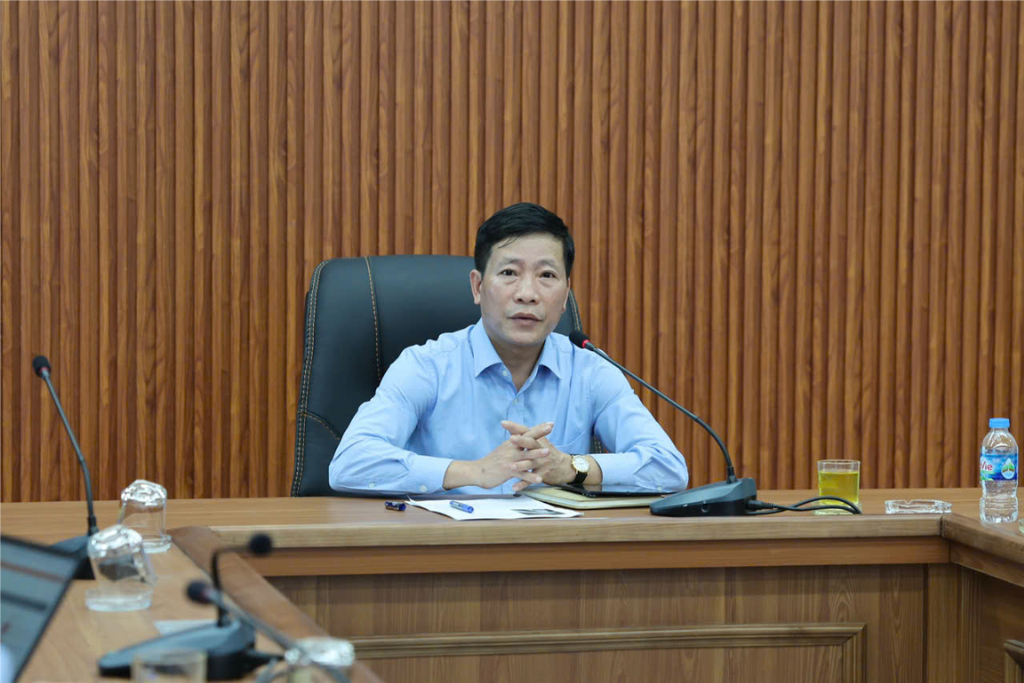
Assoc. Prof. Dr. Nguyễn Hoàng Long – Rector delivering directive remarks at the meeting
In his directive remarks, the Rector acknowledged and appreciated the initial achievements of the 20 research groups in recent years, which have contributed to forming science and technology products aligned with the University’s development orientation and gradually building an academic and research community bearing the hallmark of the University of Transport Technology.
Building on and promoting the achieved results, the Rector emphasized a unified policy of establishing and developing research groups with clearly defined functions and tasks. Each group is required to perform two fundamental functions simultaneously: leveraging its professional strengths and areas of advantage to support training and academic activities of faculties and divisions; and implementing research tasks in alignment with the objectives of the University’s science and technology programs as well as assignments from the Government.
In the 2026–2030 period, with a clear strategic orientation, a well-structured research organization model, and synchronized implementation of breakthrough mechanisms, the University of Transport Technology aims to build a modern science and technology ecosystem closely linking research, training, and technology transfer. The overarching goal is to develop the University into a leading research and innovation center in the field of transport, capable of mastering core technologies and making direct contributions to the development of the sector and the country.
University of Transport Technology (UTT)


